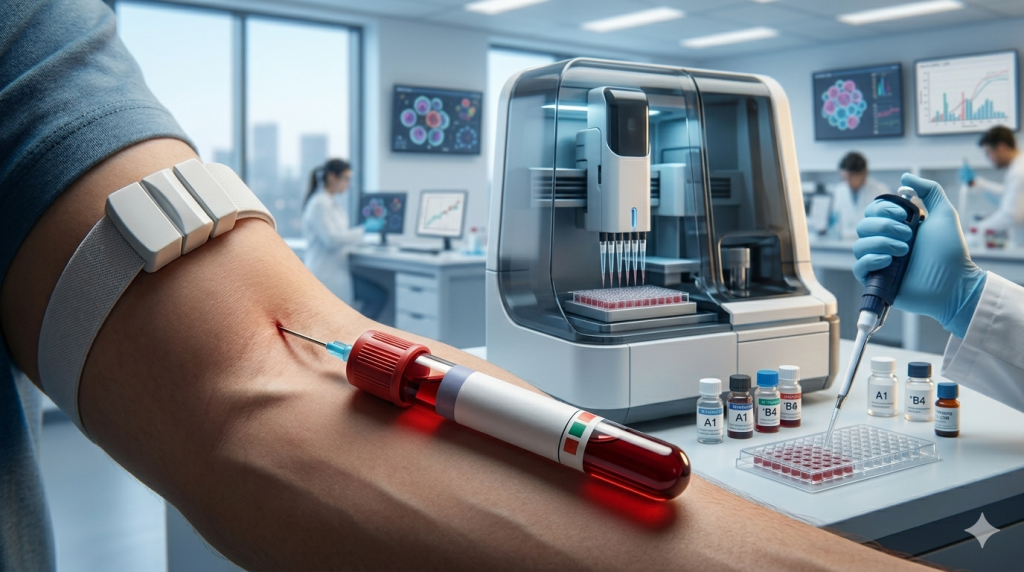
The 20th International Conference on Alzheimer’s and Parkinson’s Diseases (AD/PD™ 2026) in Copenhagen has unveiled game-changing data. As the U.S. faces a growing wave of cognitive impairment, new economic models show that integrating blood-based biomarkers (BBMs) into diagnostic pathways is not just a clinical victory—it is a fiscal necessity.
The New Frontier in Alzheimer’s Care
For decades, the “Gold Standard” for diagnosing Alzheimer’s disease (AD) has been expensive, invasive, and logistically challenging. Patients in the United States typically had to undergo either a Positron Emission Tomography (PET) scan or a Lumbar Puncture (Cerebrospinal Fluid/CSF) to confirm the presence of amyloid plaques in the brain.
However, at the AD/PD™ 2026 conference, fresh data presented by industry leaders, including Eli Lilly and Company, has underscored a pivotal shift. Confirmatory blood testing is now being hailed as the “backbone” of modern diagnostic pathways, offering a high-precision, cost-effective alternative that could reshape how the U.S. healthcare system manages neurodegeneration.
Economic Breakdown: Why Blood Tests are Winning
The core of the presentation centered on a new cost-effectiveness analysis tailored to the U.S. healthcare landscape. As new disease-modifying therapies (DMTs) like trontinemab and other anti-amyloid treatments become more widely available, the demand for precise diagnosis is skyrocketing.
1. Reducing the “Diagnostic Bottleneck”
Currently, the U.S. suffers from a shortage of PET imaging centers and specialists. This leads to months-long wait times for patients. The AD/PD™ 2026 data shows that:
BBM Triage: Using high-sensitivity blood tests (like p-tau217) to “rule out” patients who are unlikely to have amyloid pathology can reduce the need for confirmatory PET scans by up to 40-50%.
Increased Throughput: By triaging patients at the primary care level, specialists can focus on those who truly need advanced imaging, effectively doubling the capacity of the existing diagnostic infrastructure.
2. Cost Savings Per Diagnosis
According to the latest decision-tree models presented:
Traditional Pathway (PET Only): Average cost per positive diagnosis is estimated at $10,345.
BBM Triage Pathway: Average cost drops to approximately $8,868.
Incremental Savings: In a scenario with limited PET capacity, the BBM-first approach saves nearly $94,000 for every patient who avoids a “missed” diagnosis due to lack of access.
The “p-tau217” Revolution: Accuracy Meets Scalability
A major highlight of the conference was the validation of the ALZpath p-tau217 antibody and Roche’s Elecsys immunoassay. These tests have demonstrated diagnostic accuracy comparable to PET scans, with a specific focus on identifying the earliest stages of amyloid buildup.
Key Technical Advantages:
High Negative Predictive Value (NPV): These tests are exceptionally good at telling a patient they don’t have Alzheimer’s, preventing unnecessary anxiety and further expensive testing.
Rapid Turnaround: Systems like Roche’s can deliver results in as little as 18 minutes, allowing for real-time clinical decision-making during a single neurology appointment.
Accessibility: Unlike PET scans, which require a nuclear pharmacy and multi-million dollar equipment, blood tests can be drawn at any standard clinical laboratory across the U.S.
Impact on Health Equity and Access
One of the most profound takeaways from the 2026 data is the potential to bridge the gap in healthcare disparities.
“Blood-based biomarkers are no longer a future promise—they are the current reality of equitable care,” noted one lead researcher at the conference.
In rural parts of the U.S. or in underserved urban communities where PET scanners are non-existent, blood tests provide a “democratized” diagnostic tool. This ensures that a patient’s zip code no longer determines their eligibility for life-changing Alzheimer’s treatments.
Challenges and the Path Forward
Despite the overwhelming evidence of cost-effectiveness, experts at AD/PD™ 2026 reminded the audience of several hurdles:
Comorbidities: Chronic conditions like kidney disease or obesity can slightly alter biomarker levels, requiring nuanced interpretation by clinicians.
Insurance Coverage: While the economic data is clear, broad reimbursement by Medicare and private payers for these specific blood tests is still catching up to the clinical evidence.
The “Gray Zone”: A small percentage of patients fall into an intermediate range where a blood test is inconclusive, still requiring a follow-up PET scan or CSF analysis.
Conclusion: A $1.5 Billion Opportunity?
The data presented at AD/PD™ 2026 suggests that if the U.S. fully integrates confirmatory blood testing into standard diagnostic protocols, the healthcare system could save upwards of $1.5 billion annually in avoided imaging costs and streamlined care. More importantly, it allows patients to start treatment months earlier, preserving cognitive function and quality of life.
The message from Copenhagen is clear: The future of Alzheimer’s diagnosis is in the blood.
FAQ: Understanding the New AD Blood Tests
Q: Can a blood test alone diagnose Alzheimer’s disease? A: Currently, blood tests are used as a “confirmatory” or “triage” tool. While highly accurate, doctors usually use them in conjunction with cognitive assessments and, in some cases, imaging to make a final diagnosis.
Q: Is the p-tau217 test available in the U.S. now? A: Yes, several labs (such as C2N Diagnostics, ALZpath, and Quest) offer p-tau217 tests under CLIA certification, and the FDA has granted “Breakthrough Device” designations to several more.
Q: How much does an Alzheimer’s blood test cost compared to a PET scan? A: A blood test typically costs between $200 and $500, whereas an amyloid PET scan can cost between $3,000 and $6,000 (and is often not fully covered by insurance).
Q: Will these tests help me get on new Alzheimer’s drugs like Leqembi or Kisunla? A: Yes. To qualify for these treatments, you must prove you have amyloid in the brain. The new data shows that blood tests are an effective way to meet this requirement for many patients.