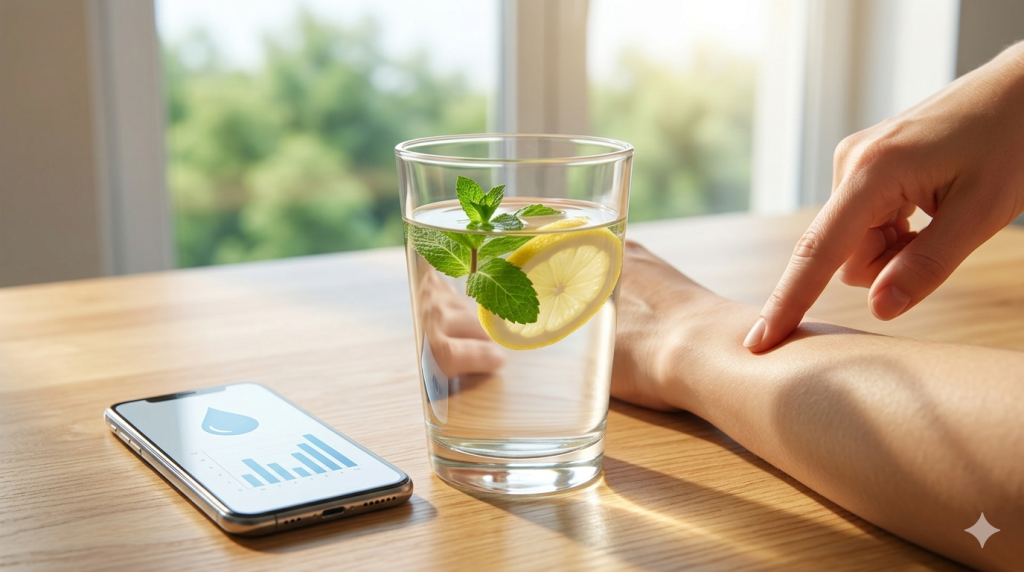
We often hear the age-old advice to “drink eight glasses of water a day,” but in the hustle of modern life, hydration usually takes a backseat to coffee, energy drinks, and hectic schedules. Water isn’t just a thirst quencher; it is the fundamental fuel for every cellular process in your body. When you fall short, your body doesn’t just get thirsty—it starts to break down in subtle, often confusing ways.
If you’ve been feeling sluggish, foggy, or just “off,” the solution might be sitting in your tap. Here is a deep dive into the silent signals of dehydration and why hitting your fluid goals is the ultimate biohack for 2026.
1. The Brain Fog Factor: Why Your Mind Feels Cloudy
Your brain is approximately 75% to 85% water. Even a minor dip in hydration levels—as little as 1% to 2%—can impair cognitive functions.
Difficulty Focusing: When dehydrated, the brain has to work harder to perform simple tasks.
Memory Lapses: Short-term memory and recall speed are directly linked to fluid balance.
Mood Swings: Dehydration is a known trigger for irritability and anxiety.
If you find yourself staring at your computer screen unable to process a simple email, reach for a glass of water before reaching for a second espresso.
2. Persistent Headaches and Migraines
A dehydration headache isn’t like a standard tension headache. It often feels like a throbbing sensation that worsens with movement. This happens because as fluid levels drop, brain tissue can temporarily shrink and “pull away” from the skull, triggering pain receptors. Furthermore, blood volume drops, reducing the flow of oxygen to the brain.
3. The “False Hunger” Trap
One of the most common signs of dehydration is actually mistaken for hunger. The hypothalamus, the part of the brain that regulates both thirst and appetite, can get its wires crossed.
Pro Tip: If you feel an afternoon craving for sugar or a heavy snack, drink 16 ounces of water and wait 15 minutes. More often than not, the “hunger” will vanish.
4. Skin Elasticity and the “Pinch Test”
Your skin is your body’s largest organ, and it’s the last to receive hydration. If you aren’t drinking enough, your skin will lose its “turgor”—its ability to snap back into place.
The Test: Pinch the skin on the back of your hand. If it takes a second to return to normal rather than snapping back instantly, you are likely dehydrated.
The Glow: Dehydration leads to prominent fine lines, dullness, and dark under-eye circles.
5. Dark Urine and Infrequent Bathroom Breaks
This is the most reliable “dashboard indicator” of your hydration status.
Pale Straw/Clear: You are well-hydrated.
Apple Juice/Amber: You are moderately dehydrated.
Syrup/Brown: You are severely dehydrated and need fluid immediately.
Additionally, if you find yourself going more than 6 to 8 hours without needing to urinate, your kidneys are desperately trying to conserve what little fluid you have left.
6. Muscle Cramps and Joint Pain
Water acts as a lubricant for your joints and a cushion for your spinal cord. Cartilage is composed of about 80% water. When you’re dry, your joints grind together, leading to aches. Furthermore, dehydration causes an imbalance in electrolytes (like sodium and potassium), which leads to painful, involuntary muscle spasms, especially in the calves.
7. Bad Breath (Halitosis)
Saliva has potent antibacterial properties. When you don’t drink enough water, your body produces less saliva. This allows bacteria to flourish in the mouth, leading to “dry mouth” and chronic bad breath that no amount of gum can fix.
8. Digestive Distress and Constipation
Water is the “grease” for your digestive tract. It helps break down food and allows fiber to do its job. Without it, the colon absorbs water from stools to keep the rest of the body functioning, resulting in hard, difficult-to-pass stools. Chronic constipation is frequently just chronic dehydration in disguise.
9. Elevated Heart Rate and Fatigue
When you are dehydrated, your blood volume decreases, making the blood “thicker.” Your heart has to beat faster and work harder to pump this viscous blood through your veins. This puts an immense strain on your cardiovascular system, leading to that “heavy limb” feeling and unexplained exhaustion.
10. Extreme Thirst and Dry Eyes
By the time you actually feel thirsty, you are already dehydrated. It’s a late-stage warning. Similarly, if your eyes feel scratchy or dry, it’s because your body can no longer spare the fluid to create tears to lubricate them.
How Much Water Do You Actually Need?
The “8×8 rule” is a good baseline, but hydration is personal. Factors include:
Activity Level: Sweating requires immediate replenishment.
Environment: Humidity and high altitudes strip moisture from your body.
Diet: High-sodium diets require more water to flush out excess salt.
A better formula: Take your body weight in pounds, divide by two, and aim for that many ounces of water per day. (e.g., A 160lb person should aim for 80oz).
Frequently Asked Questions (FAQ)
Q: Can I count coffee or tea as water intake? A: Yes, but with a caveat. While caffeine is a mild diuretic, the water in the beverage still contributes to your daily total. However, plain water remains the gold standard because it doesn’t require the liver to process additives or stimulants.
Q: Is it possible to drink too much water? A: Yes. A condition called hyponatremia occurs when you drink so much water that it dilutes the sodium levels in your blood to dangerous levels. This is rare and usually only seen in endurance athletes.
Q: I hate the taste of plain water. What can I do? A: Try “infusions.” Add slices of cucumber, lemon, mint, or frozen berries. This adds micronutrients and flavor without the sugars found in juice or soda.
Q: Does eating watery foods count? A: Absolutely. About 20% of our daily fluid intake comes from food. Watermelon, cucumbers, celery, and strawberries are over 90% water.
Conclusion
Water is the simplest, cheapest, and most effective medicine available. If you’ve been struggling with low energy, stubborn headaches, or digestive issues, the remedy might not be a prescription—it might just be a refill. Start your morning with a tall glass of water before your coffee, and pay attention to the signals your body is sending. Your brain, skin, and heart will thank you.