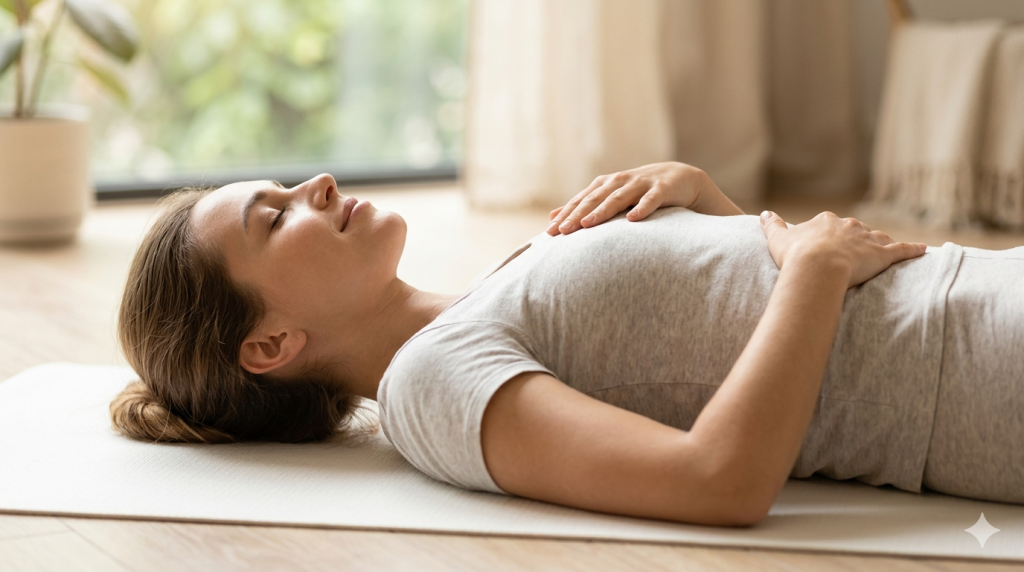
Do you ever find yourself lying in bed, staring at the ceiling while your mind races through a never-ending to-do list? You aren’t alone. In an era of constant connectivity and rising stress levels, sleep has become a luxury rather than a biological right. While many reach for melatonin or expensive sleep gadgets, the most effective tool for rest is actually built right into your body: your breath.
Specifically, a technique known as 4-7-8 breathing is taking the wellness world by storm. Originating from ancient yogic traditions and popularized by integrative medicine experts, this rhythmic breathing pattern acts as a natural tranquilizer for the nervous system.
Why Your Brain Won’t Let You Sleep
To understand why breathwork works, we have to look at the Autonomic Nervous System (ANS). When you are stressed, your body is stuck in “Sympathetic” mode—the famous fight-or-flight response. Your heart rate increases, cortisol spikes, and your brain stays hyper-alert to perceive threats.
Sleep requires the opposite: the “Parasympathetic” state, often called “Rest and Digest.” The 4-7-8 method is essentially a manual override. By consciously slowing down the breath and extending the exhale, you send a physical signal to your brain that it is safe to power down.
How to Practice the 4-7-8 Technique
The beauty of this method is its simplicity. You can do it anywhere, though for sleep, it is best practiced while lying flat on your back in a dark room.
The Setup: Place the tip of your tongue against the ridge of tissue just behind your upper front teeth and keep it there throughout the entire exercise.
Exhale: Empty your lungs of air completely through your mouth, making a “whoosh” sound.
Inhale (4 Seconds): Close your mouth and inhale quietly through your nose to a mental count of four.
Hold (7 Seconds): Hold your breath for a count of seven. This is the most critical part, as it allows oxygen to saturate your bloodstream and slows the heart rate.
Exhale (8 Seconds): Exhale completely through your mouth, making another “whoosh” sound to a count of eight.
Repeat: This completes one breath. Repeat the cycle three more times for a total of four breaths.
The Science Behind the Numbers
You might wonder why these specific numbers matter. The ratio is designed to manipulate the carbon dioxide and oxygen balance in your blood.
The Inhale (4): Forces you to take in more oxygen.
The Hold (7): Gives the oxygen time to enter the bloodstream and allows the lungs to expand fully.
The Long Exhale (8): This is the “magic” number. A long, slow exhale stimulates the Vagus Nerve, the longest nerve in your body and the primary driver of the parasympathetic system. When the Vagus Nerve is activated, it lowers blood pressure and heart rate almost instantly.
Consistency Over Intensity
If you are new to breathwork, you might feel slightly lightheaded the first time you try this. This is normal as your body adjusts to the change in oxygen levels. Experts recommend starting with just four breath cycles twice a day. As you become more comfortable, you can work your way up to eight cycles.
The key is regularity. Think of it like a workout for your lungs and nervous system. If you practice this daily—not just when you are stressed—your body becomes “trained” to relax more quickly, making it easier to fall asleep even on your most high-pressure days.
Beyond Sleep: The Daytime Benefits
While this technique is a powerhouse for insomnia, its benefits extend into your waking hours:
Anxiety Management: Using the 4-7-8 breath during a stressful meeting can prevent a full-blown panic response.
Emotional Regulation: It provides a “pause button” between a stressful event and your reaction.
Digestive Support: Since the parasympathetic system controls digestion, deep breathing can help ease stress-related stomach issues.
Frequently Asked Questions (FAQ)
1. How long does it take for the 4-7-8 technique to work? For most people, the immediate physiological calming effect happens within 60 to 90 seconds. However, to see a significant improvement in chronic insomnia, it usually takes 4 to 6 weeks of consistent daily practice.
2. Can I do this if I have a stuffy nose? If you cannot breathe through your nose, you can perform the inhale through pursed lips, though nasal breathing is preferred as it filters and warms the air, further aiding relaxation.
3. Why must the tongue stay behind the teeth? In yogic traditions (Pranayama), this position helps direct the flow of energy. Physiologically, it helps keep the jaw relaxed and ensures the “whoosh” sound is made correctly during the exhale.
4. Is there anyone who should avoid this technique? While generally safe, individuals with severe respiratory conditions (like COPD or asthma) should consult with a doctor before trying breath-holding exercises.
5. Can I do more than 8 cycles at a time? It is generally recommended to stop at 8 cycles. The goal is to reset the nervous system, not to induce hyperventilation. Quality and rhythm are more important than the number of repetitions.
Conclusion
The 4-7-8 breathing trick is more than just a wellness trend; it is a scientifically-backed method to reclaim control over your body’s stress response. In a world that constantly demands our attention, taking four minutes a day to simply breathe might be the most productive thing you do for your health. Tonight, put down the phone, dim the lights, and let your breath guide you into the deep, restorative sleep you deserve.