In an era dominated by smartphones, laptops, and the inevitable “forward head posture,” neck tension has become an unofficial epidemic in the United States. According to recent health surveys, nearly 80% of American adults experience some form of neck or shoulder pain annually. While many turn to massage therapy or over-the-counter painkillers, yoga professionals are pointing toward a simpler, more sustainable solution.
In a recent deep dive by yoga experts at Fit&Well, one specific posture has emerged as the “holy grail” for unlocking tension: The Supported Fish Pose (Matsyasana).
As a yoga teacher with years of experience observing the physical toll of sedentary lifestyles, I can confirm that this pose isn’t just about flexibility—nurturing the cervical spine and reversing the structural damage caused by our digital habits is a biological necessity.
The Science of the Sag: Why Our Necks Are Breaking
To understand why this pose is so effective, we must first look at the mechanics of “Tech Neck.” The human head weighs approximately 10 to 12 pounds in a neutral position. However, when we lean forward 60 degrees to look at a phone, the effective weight on our neck increases to a staggering 60 pounds.
Over time, this results in:
Shortened Anterior Muscles: The muscles in the front of your neck and chest (pectorals) become tight and constricted.
Overstretched Posterior Muscles: The muscles in the back of your neck and upper shoulders (trapezius) become weak and chronically strained.
Breath Restriction: A collapsed chest limits the expansion of the diaphragm, leading to shallow, anxiety-inducing breathing.
Why Supported Fish Pose is the Ultimate Unlock
While there are dozens of stretches for the neck, Supported Fish Pose stands out because it addresses the root cause rather than just the symptom. It is a “heart-opener” that utilizes gravity to achieve what active stretching often cannot.
The Anatomy of the Pose
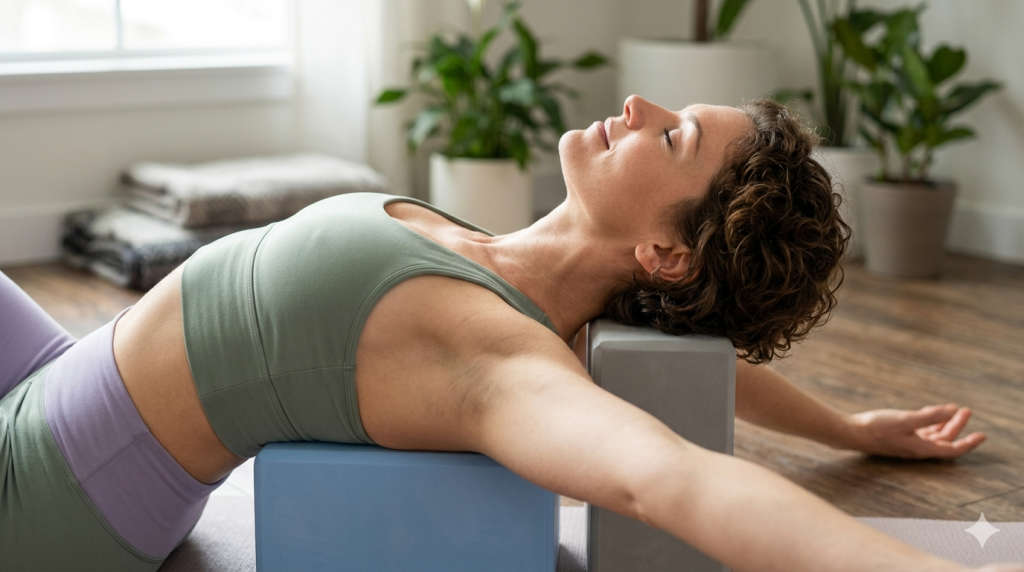
By placing a yoga block or a rolled-up towel between the shoulder blades, you create a fulcrum point. This allows the shoulders to drop back, the chest to broaden, and—most importantly—the front of the throat to lengthen.
The Neurological Benefit
The neck is home to the vagus nerve, a key player in our parasympathetic nervous system (the “rest and digest” mode). By gently opening the throat and softening the jaw in Fish Pose, you signal to your brain that it is safe to downshift from “fight or flight.” This is why many practitioners report feeling a sense of emotional release or sudden calm after just three minutes in the pose.
Step-by-Step Guide: How to Perform the Perfect Supported Fish
To optimize this for Google Discover readers looking for immediate home relief, follow these professional cues:
Gather Your Props: You will need two yoga blocks, or two firm pillows/rolled-up bath towels.
The Base: Place one block horizontally across the mat where your shoulder blades will land. Place the second block at the top of the mat (this will be your “pillow”).
The Descent: Slowly lower yourself down. The first block should sit right underneath your shoulder blades (the bra-line area). Your head should rest comfortably on the second block.
Arm Placement: Lay your arms out to the sides in a ‘T’ or ‘Cactus’ shape, palms facing up to encourage shoulder external rotation.
Leg Options: Keep your knees bent with feet flat on the floor if you have lower back sensitivity, or let the legs stretch out long.
The Duration: Stay here for 3 to 5 minutes. Gravity does the work; your only job is to breathe into the space in your chest.
Common Mistakes to Avoid
Even a “passive” pose can cause issues if done incorrectly. As a teacher, I frequently see these three errors:
Hyperextending the Neck: If the head is hanging too far back without support, it can “pinch” the cervical nerves. Always ensure your head feels supported and your chin is slightly tucked or neutral.
Misplacing the Block: If the block is too low (in the lumbar/lower back), it becomes a backbend rather than a neck/chest opener. Ensure the support is behind the ribcage.
Tensing the Jaw: We carry a massive amount of stress in the masseter muscles. Ensure your teeth are slightly parted and your tongue is away from the roof of your mouth.
The 2026 Wellness Trend: Micro-Restorative Practices
The popularity of this pose aligns with a broader shift in American fitness. In 2026, we are moving away from “high-intensity everything” and toward Micro-Restoration. People are realizing that 60 minutes of HIIT cannot undo 10 hours of sitting. Instead, integrating “movement snacks” like the Fish Pose for five minutes before bed is proving more effective for long-term spinal health.
Conclusion: A Simple Shift for a Pain-Free Life
Unlocking neck tension doesn’t require an expensive chiropractor or a complex gym routine. It requires a conscious effort to reverse the physical closing-in of our bodies. The Supported Fish Pose is a physical “undo” button for the modern world. By incorporating this into your daily routine, you aren’t just stretching a muscle; you are reclaiming your posture, your breath, and your peace of mind.
Frequently Asked Questions (FAQ)
1. How often should I do this pose to see results?
For chronic “Tech Neck,” consistency is key. Performing this pose for 5 minutes every evening can significantly reduce tension within two weeks.
2. What if I don’t have yoga blocks?
You can easily substitute blocks with a rolled-up yoga mat, two firm decorative pillows, or even a couple of thick hardcover books wrapped in a towel for padding.
3. Can this pose help with tension headaches?
Yes. Many tension headaches originate from the suboccipital muscles at the base of the skull. By relaxing the shoulders and neck in Fish Pose, you can reduce the triggers for these headaches.
4. Is it safe for people with herniated discs?
If you have a diagnosed cervical or lumbar disc issue, you should consult your doctor first. However, the “Supported” version of this pose is generally considered much safer than the traditional version because it limits the range of motion to a therapeutic level.
5. Why do I feel emotional when I do this stretch?
The chest and throat are areas where many people “armour” themselves against stress. Opening these areas can sometimes trigger a release of pent-up emotions—this is a normal and healthy part of a restorative yoga practice.