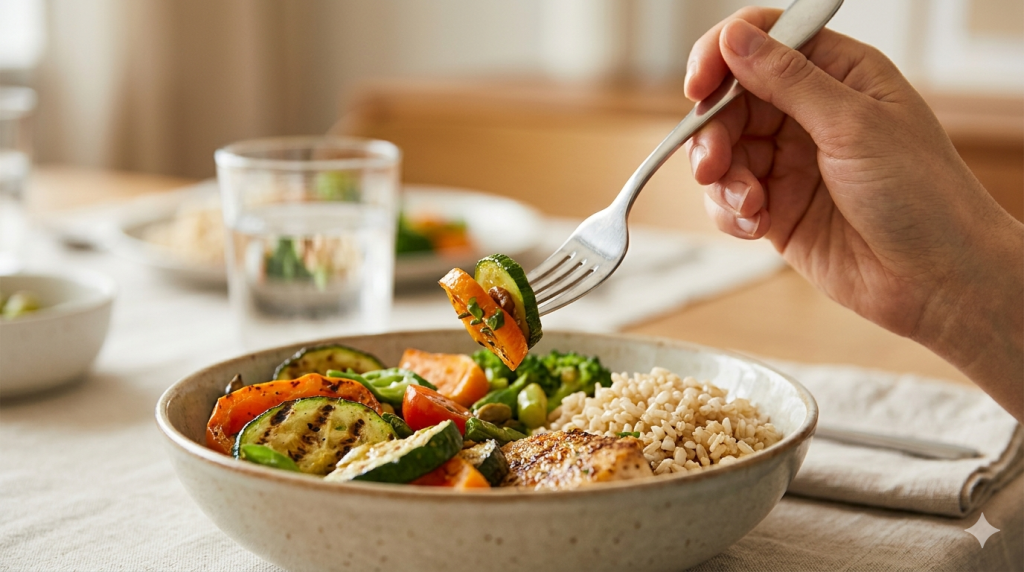
In a world obsessed with expensive supplements, restrictive detoxes, and complex elimination diets, we often overlook the simplest mechanical aspect of nutrition. Registered dietitian Clementine Vaughan reveals that the most effective “hack” to reduce bloating costs nothing and requires zero changes to your actual menu—it’s all about how you eat.
Abdominal bloating after meals is more than just a physical discomfort; it’s a source of daily frustration for millions. According to digestive health surveys in the United States, roughly 20% to 30% of the population experiences regular bloating. While most people immediately blame specific “trigger foods” like beans, broccoli, or dairy, experts are pointing toward a much simpler culprit: the speed at which we consume our food.
The Digestive “Hack”: It’s Not What’s on the Plate, But How It’s Handled
According to Clementine Vaughan, the most common and frequently overlooked cause of post-meal bloating is eating too quickly. In our fast-paced modern life, “desktop dining,” eating on the go, or rushing through a meal in under ten minutes has become the societal norm.
Vaughan explained to Fit&Well that while social media often pushes us to focus on “maxxing” protein or finding the magic supplement, the actual mechanics of eating are rarely discussed. Rushing through a meal isn’t just a bad habit; it’s a direct disruption of your body’s biological processing system.
Why Does Speed Lead to Bloating?
The mechanism behind speed-induced bloating occurs on both a physical and a physiological level:
1. Aerophagia: The Silent Air Intake
When you eat rapidly, you aren’t just swallowing food; you are gulping down significant amounts of air with every bite. This excess gas enters the stomach, creates pressure, and leads to that characteristic “tight” feeling, often followed by frequent belching or flatulence.
2. Insufficient Mechanical Breakdown
Digestion starts in the mouth, not the stomach. Saliva contains amylase, an enzyme that begins breaking down carbohydrates the moment you chew. If you swallow too fast, large particles of food reach the stomach without being properly pre-processed. This forces the stomach to work twice as hard, leading to food sitting longer in the digestive tract, where it may ferment and produce excess gas.
3. The Gut-Brain Connection Gap
It takes approximately 15 to 20 minutes for satiety signals to travel from your gut to your brain. When you finish a large meal in five minutes, your brain hasn’t registered that you’ve had enough energy. By the time the “fullness” signal finally arrives, you’ve likely overeaten, causing the stomach to stretch beyond its comfortable capacity and resulting in painful distension.
5 Proven Techniques to Slow Down and Protect Your Gut
To break the subconscious habit of fast eating, Vaughan suggests five actionable strategies that can be implemented at your very next meal:
1. Put Your Cutlery Down Between Bites
This is perhaps the most powerful mechanical tool at your disposal. Instead of holding your fork or chopsticks throughout the entire meal, consciously place them on the table after every mouthful. Only pick them back up once you have completely swallowed. This creates natural pauses that prevent the “shoveling” effect.
2. Sip Water Strategically
Take small sips of plain water (avoid carbonated drinks, as the bubbles add more gas to the system) between mouthfuls. This not only helps lubricate the food for easier passage but also forces a temporary halt in the chewing process.
3. The “Chew Count” Challenge
Vaughan recommends aiming for 20 to 30 chews per bite. While this may seem excessive initially, even a small increase in your current chewing habits can significantly strengthen the gut-brain connection. Aim to turn your food into a nearly liquid paste before swallowing to take the load off your stomach.
4. Set a Mealtime Timer
Challenge yourself to make mealtimes longer until it becomes a permanent habit. Start by ensuring your meal lasts at least 15 minutes, eventually working your way up to 30 minutes. You might find it uncomfortable to sit still for that long at first, but your digestive system will thank you.
5. Practice Digital Detox During Meals
Scrolling through TikTok, watching Netflix, or checking emails while eating is the primary enemy of mindful digestion. When your brain is distracted by a screen, it loses awareness of the chewing and swallowing process, leading to mindless, rapid consumption. Turn off the devices and focus on the texture, aroma, and flavor of your food.
The “Double Benefit”: Weight Management and Mental Clarity
By slowing down, you achieve more than just a flatter stomach. Dietitians emphasize that slow eating promotes Intuitive Eating. When you are in tune with your body’s hunger and fullness cues, you are far less likely to overeat—making it one of the most sustainable ways to manage weight without restrictive dieting.
Furthermore, dedicating time to a meal is a form of stress management. When you eat in a relaxed state, you activate the parasympathetic nervous system (the “rest and digest” mode), which optimizes nutrient absorption and reduces the production of stress hormones that can further aggravate gut issues.
Conclusion
Bloating isn’t always a medical mystery requiring expensive solutions. Often, the answer lies in the palm of your hand—or rather, the speed of your fork. By practicing the art of eating slowly, you are giving your digestive system the time and space it needs to function at its peak. Start with your next meal: slow down, breathe, and enjoy the experience. Your gut will feel the difference almost immediately.
FAQ: Common Questions About Bloating
Q: Besides eating fast, what are other common bloating triggers? A: Other common causes include a sudden high intake of fiber, food sensitivities (such as lactose or gluten), sugar alcohols (found in “sugar-free” candies), and drinking through straws, which increases air intake.
Q: What if I eat slowly and still feel bloated? A: If mechanical changes don’t help, it is wise to keep a food diary to identify specific trigger ingredients. You should also consult a healthcare provider to rule out underlying conditions like Irritable Bowel Syndrome (IBS) or Small Intestinal Bacterial Overgrowth (SIBO).
Q: Are there any foods that help reduce bloating quickly? A: Ginger tea, peppermint tea, and fennel seeds are well-known natural carminatives that help relax the digestive tract muscles and assist in the passage of trapped gas.
Q: Does post-meal exercise help? A: Yes! A gentle 10-to-15-minute walk after eating can stimulate peristalsis (the movement of the digestive tract), helping food and gas move through the system more efficiently.