Antibiotics are undeniably one of the greatest triumphs of modern medicine. They have saved countless lives by neutralizing bacterial infections that were once fatal. However, these “miracle drugs” are not precision lasers; they are more akin to a controlled explosion within the digestive tract. While they successfully eliminate harmful pathogens, they often take down the “good” bacteria—the beneficial microbes that regulate everything from our immune system to our mental health—as collateral damage.
When the delicate balance of the gut microbiome is disrupted, many people experience bloating, indigestion, or more severe gastrointestinal distress. Understanding how to support your internal ecosystem during a course of medication is vital for long-term wellness. By focusing on targeted nutrition and strategic supplementation, you can mitigate the damage and bounce back faster.
THE SCIENCE OF MICROBIAL DISRUPTION
The human gut is home to trillions of microorganisms, collectively known as the microbiota. This community helps ferment dietary fiber, produce essential vitamins like B12 and K, and trains the immune system to distinguish between friend and foe.
When you take a broad-spectrum antibiotic, it cannot distinguish between the Streptococcus causing your throat infection and the Lactobacillus helping you digest your lunch. Research suggests that even a single week of antibiotics can alter the gut’s composition for up to a year. This “dysbiosis” is why many clinicians now emphasize a proactive nutritional approach the moment a prescription is written.
NUTRITIONAL PILLARS FOR GUT RECOVERY
To protect your gut health, you must feed the survivors and replant the seeds of a healthy microbiome. Here are the primary dietary strategies recommended by nutrition experts:
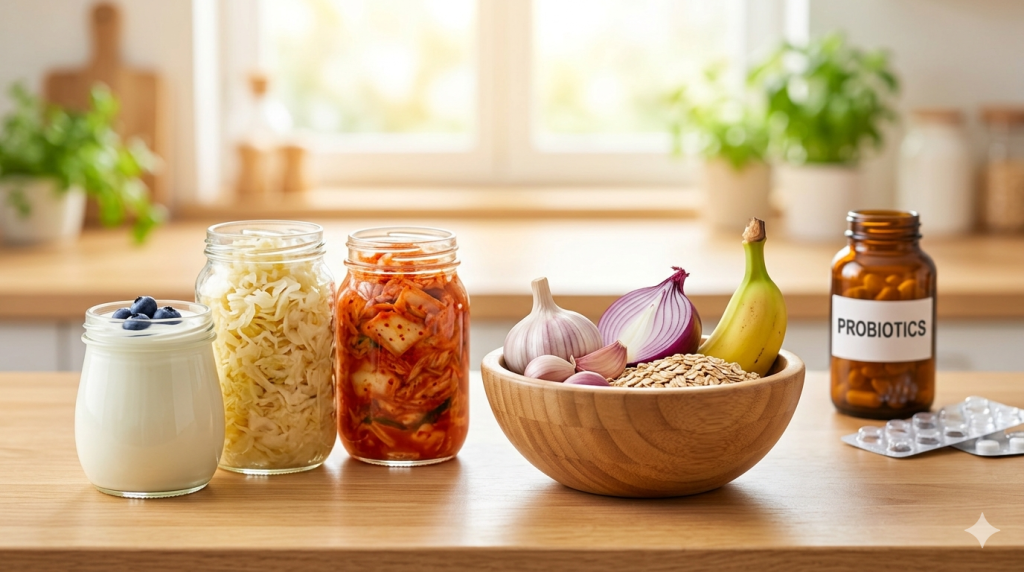
PRIORITIZE FERMENTED FOODS: Fermented foods are natural sources of probiotics—living beneficial bacteria. Integrating these into your daily meals provides a continuous “top-off” of healthy microbes.
GREEK YOGURT OR KEFIR: These contain high concentrations of Bifidobacteria. Ensure the label says “live and active cultures.”
SAUERKRAUT AND KIMCHI: These fermented vegetables provide both probiotics and organic acids that support a healthy gut pH.
TEMPEH AND MISO: Excellent plant-based options that offer a different variety of microbial strains.
EMBRACE THE “P” FACTOR (PREBIOTICS): If probiotics are the seeds, prebiotics are the fertilizer. Prebiotics are non-digestible fibers that feed the good bacteria already living in your gut.
GARLIC AND ONIONS: Rich in inulin, a powerful prebiotic fiber.
UNDER-RIPE BANANAS: These contain resistant starch, which travels to the large intestine to feed beneficial microbes.
WHOLE GRAINS: Oats, barley, and quinoa provide the bulk necessary for a healthy transit time through the digestive system.
POLYPHENOL-RICH FOODS: Polyphenols are plant compounds found in colorful foods that have antioxidant properties.
BERRIES AND COCOA: Dark chocolate (at least 70% cacao) and blueberries are excellent sources.
GREEN TEA: Contains catechins that can help inhibit the growth of “bad” bacteria like E. coli while supporting beneficial strains.
THE ROLE OF TARGETED SUPPLEMENTATION
While food is the first line of defense, supplements can offer a concentrated dose of support. However, timing is everything.
Many people make the mistake of taking their probiotic at the exact same time as their antibiotic. This often results in the antibiotic simply killing the probiotic before it can do any good. Experts generally recommend spacing the two by at least two to four hours.
One specific strain, Saccharomyces boulardii, is particularly effective during antibiotic treatment. Unlike most probiotics, S. boulardii is a yeast, not a bacterium. This means it is naturally resistant to antibiotics, allowing it to survive the journey through your system and prevent antibiotic-associated diarrhea.
LIFESTYLE HABITS FOR A RESILIENT GUT
Beyond what you eat, how you live impacts your recovery:
HYDRATION: Antibiotics can be taxing on the kidneys and liver. Drinking plenty of water helps flush out metabolic byproducts and keeps the mucosal lining of the gut hydrated.
SLEEP: Circadian rhythms heavily influence the microbiome. Aim for 7-9 hours of quality sleep to give your body the energy it needs for cellular repair.
STRESS MANAGEMENT: The gut-brain axis is a two-way street. High stress can lead to increased gut permeability (leaky gut), making it harder for the microbiome to stabilize.
CONCLUSION: A PROACTIVE PATH FORWARD
Recovery doesn’t happen overnight. It is a gradual process of rebuilding a complex biological community. By viewing your diet as a tool for restoration rather than just fuel, you can navigate a course of antibiotics without long-term damage to your metabolic or digestive health. Listen to your body, prioritize fermented and fibrous foods, and give your internal “garden” the nutrients it needs to flourish once again.
FREQUENTLY ASKED QUESTIONS (FAQ)
SHOULD I TAKE PROBIOTICS WHILE STILL TAKING ANTIBIOTICS? Yes, but timing is crucial. Take your probiotic supplement a few hours after your antibiotic dose to ensure the medication doesn’t neutralize the beneficial bacteria immediately.
CAN I EAT SUGAR WHILE ON ANTIBIOTICS? It is best to limit refined sugars. Pathogenic yeasts and “bad” bacteria often thrive on sugar, which can lead to overgrowth issues like Candida while your “good” bacteria are suppressed.
HOW LONG DOES IT TAKE FOR THE GUT TO RECOVER? While symptoms like bloating may resolve in a few days, the full microbial diversity can take several weeks or even months to return to baseline levels.
IS IT OKAY TO EXERCISE DURING ANTIBIOTIC TREATMENT? Light to moderate exercise is generally fine and can actually help stimulate digestion. However, avoid intense sessions if you are feeling fatigued.
WHAT ARE THE SIGNS THAT MY GUT IS STRUGGLING? Common indicators include persistent bloating, changes in bowel habits, unusual food sensitivities, and even skin breakouts or brain fog.