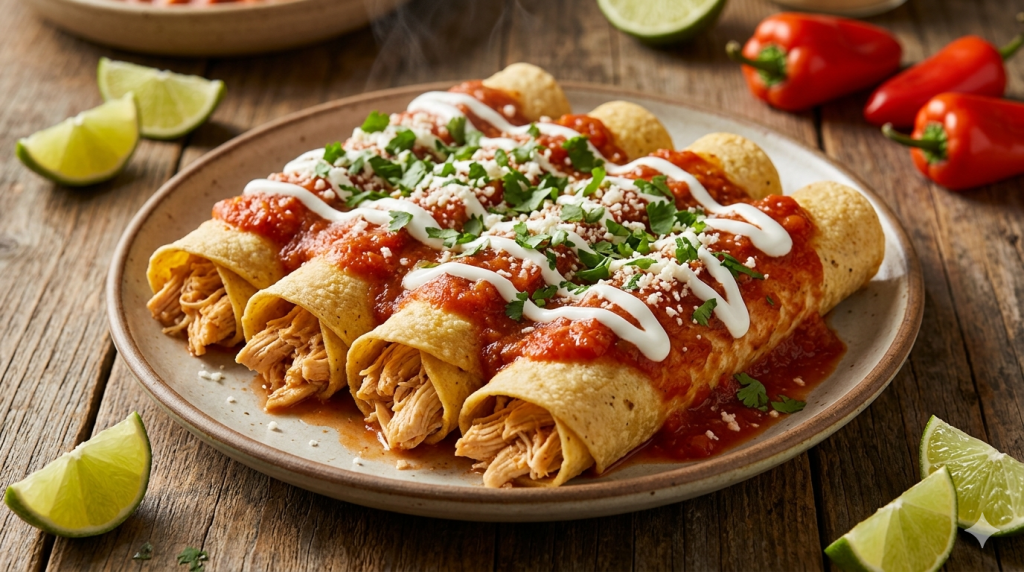
Forget restrictive dieting—discover how metabolic-friendly swaps are transforming Mexican classics into muscle-building powerhouses that keep you full for hours.
In the fast-evolving landscape of modern nutrition, the “all-or-nothing” mentality is finally being pushed to the sidelines. For decades, fitness enthusiasts and health-conscious individuals were led to believe that “comfort food” was a direct enemy of progress—something to be reserved for “cheat days” or avoided altogether. However, as our understanding of satiety, the thermic effect of food (TEF), and macronutrient density matures, a new culinary category has emerged: Functional Comfort.
Leading this nutritional charge is the High-Protein Chicken Enchilada. This isn’t just a meal; it’s a strategic re-engineering of a Mexican classic. By pivoting the dish’s profile away from simple carbohydrates and hidden fats toward high-quality lean proteins and complex fibers, we create a powerhouse dinner that supports muscle recovery, boosts metabolic rate, and—most importantly—actually satisfies the soul.
The Science of Satiety: Why Protein is the Ultimate Hunger Killer
To understand why this specific dish is currently dominating wellness feeds and Google Discover, we must look at the biochemistry of how we eat. A traditional enchilada, typically loaded with refined flour tortillas and heavy, oil-based sauces, creates a rapid spike in blood glucose. This triggers a surge of insulin, leading to a subsequent “sugar crash” that leaves you searching for snacks within two hours of finishing your plate.
High-protein alternatives operate on an entirely different metabolic timeline. Protein is the most satiating macronutrient because it directly influences hunger hormones. Specifically, it suppresses ghrelin (the hormone that tells you to eat) while stimulating the production of peptide YY, which signals to your brain that you are full.
When a single serving of these enchiladas delivers 40 to 50 grams of protein, you aren’t just consuming calories; you are chemically signaling your body to stay satisfied. This makes it an invaluable tool for anyone looking to manage their weight without the constant struggle of willpower.
Deconstructing the Dish: The Modern “Smart Swaps”
The transition from a high-calorie “fat bomb” to a high-protein “superfood” lies in three critical ingredient substitutions.
1. The Protein Anchor: Slow-Cooked Poultry
The foundation starts with lean chicken breast. While rotisserie chicken is a convenient shortcut, the gold standard for this dish is chicken breast poached in a bone broth infused with garlic, cumin, and lime. This method ensures the meat remains succulent and tender without adding the saturated fats found in chicken skin or oil-based frying. Shredding the meat increases its surface area, allowing it to act as a sponge for the nutrient-dense sauces.
2. The Game Changer: Greek Yogurt Crema
The most significant breakthrough in healthy Mexican cooking is the replacement of heavy sour cream with plain, non-fat Greek Yogurt. When whisked with a splash of lime juice and a pinch of sea salt, Greek yogurt becomes indistinguishable from traditional Mexican crema once baked. However, the nutritional difference is staggering: you replace empty fats with a massive boost of casein and whey proteins, alongside gut-healthy probiotics.
3. Carbohydrate Intelligence: Fiber-Rich Foundations
Refined white flour tortillas are essentially simple sugars. To optimize this dish, we look toward corn tortillas (a whole-grain option) or the new wave of high-fiber, low-carb wraps. These alternatives provide a lower glycemic response, ensuring your energy levels remain stable throughout the evening.
Step-by-Step Strategy for Perfect Meal Prep
Success in the kitchen—much like success in the gym—is built on a foundation of preparation. To make these enchiladas a staple of your lifestyle, follow this structured approach:
The “Volume” Secret: Start by sautéing high-volume, low-calorie vegetables like bell peppers, spinach, and white onions. Adding these to your chicken filling increases the physical size of your meal (volume eating) without significantly raising the calorie count.
The Sauce Soak: Instead of just pouring sauce over the top, lightly dip each tortilla into warm salsa verde or red enchilada sauce before rolling. This ensures every bite is flavorful and prevents the tortillas from becoming brittle in the oven.
The Cheese Factor: Use a “sharp” cheese like aged Cheddar or a salty Cotija. Because these cheeses have such intense flavor profiles, you can use 50% less than a mild cheese while achieving the same satisfying taste.
Micronutrients: The Unsung Heroes of Performance
While “High Protein” is the headline, the micronutrients in this dish provide the biological “spark plugs” needed for energy.
Cilantro and Lime: Provide a hit of Vitamin C, essential for collagen synthesis and joint health.
Black Beans: (If added) bring magnesium and folate, supporting heart health and muscle relaxation.
Fresh Chilies: Contain capsaicin, which can provide a slight temporary boost to thermogenesis (fat burning).
Frequently Asked Questions (FAQ)
Q: Can I freeze these for later in the week? A: Absolutely. These enchiladas are a meal-prep dream. For the best texture, freeze them before the final bake. When ready, thaw them in the fridge overnight and bake as fresh. This prevents the tortillas from becoming mushy.
Q: Is the Greek yogurt swap really unnoticeable? A: Once it is mixed with spices and baked under a layer of sauce and a little cheese, 9 out of 10 people cannot tell the difference. The heat mellows the yogurt’s natural tang, leaving only a rich, creamy texture.
Q: How many grams of protein are actually in a serving? A: Depending on your tortilla choice and the amount of chicken used, a standard two-enchilada serving typically ranges from 38g to 45g of protein, with approximately 350-450 calories.
Q: What is the best side dish to keep it healthy? A: Skip the heavy rice and beans. Instead, pair your enchiladas with a fresh cabbage slaw tossed in lime juice and vinegar, or a simple cucumber and tomato salad with cilantro.
Conclusion: Redefining “Health Food”
The rise of high-protein comfort foods like these chicken enchiladas represents a fundamental shift in our food culture. We are moving away from the era of deprivation and moving toward an era of nutritional abundance. You do not have to choose between the foods you love and the body you want.
By understanding the role of protein in satiety and making intelligent ingredient choices, you can enjoy a rich, cheesy, and deeply satisfying dinner that actually helps you reach your goals. It’s time to stop dieting and start fueling. Your journey to a healthier, stronger version of yourself can—and should—include the comfort of a perfect enchilada.