The “fermentation frenzy” has taken the wellness world by storm. From tangy kimchi to fizzy kombucha, these probiotic powerhouses are often hailed as the holy grail of microbiome health. But for a significant number of people, diving into a jar of sauerkraut leads to bloating, gas, and digestive distress rather than “gut bliss.”
If your digestive system rebels at the sight of fermented foods—perhaps due to Histamine Intolerance or Small Intestinal Bacterial Overgrowth (SIBO)—you aren’t locked out of the gut health club. You simply need a different strategy. Improving your microbiome doesn’t require a “one-size-fits-all” approach; it requires nourishing the beneficial bacteria you already have using gentle, effective alternatives.
Why Fermented Foods Aren’t for Everyone
Before we dive into the alternatives, it is important to understand why some people struggle with fermented products. Fermentation produces biogenic amines, such as histamine. If your body lacks the enzyme (DAO) to break these down, you may experience headaches, bloating, or skin flushing. Additionally, for those with SIBO, adding more live bacteria to an already “overcrowded” small intestine can exacerbate symptoms.
The good news? You can support your gut lining and diversify your microbiome without touching a single drop of brine. Here are five superior alternatives for better gut health.
1. The Power of Soluble Fiber: Oats and Chia Seeds
If probiotics (live bacteria) are the “players” in your gut, prebiotics (fiber) are the “fuel.” Soluble fiber is particularly effective because it dissolves in water to form a gel-like substance, slowing digestion and providing a steady source of energy for your beneficial microbes.
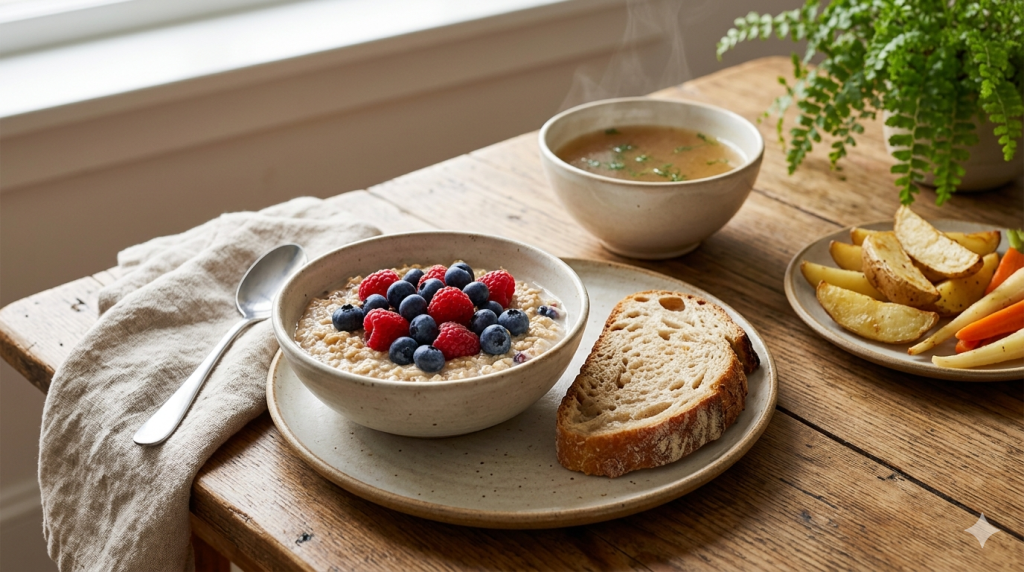
Beta-Glucan: Found abundantly in oats, this specific type of soluble fiber has been shown to increase the population of Lactobacillus and Bifidobacterium species.
Chia Seeds: These tiny seeds can absorb up to 12 times their weight in water. This mucilaginous quality helps lubricate the digestive tract, ensuring smooth transit and preventing the constipation that often plagues those with sensitive guts.
How to use it: Start your morning with overnight oats or a chia pudding. Because these are “slow-burn” fibers, they provide gut support without the sudden gas production often associated with fermented cabbage.
2. Polyphenol-Rich Berries: Fueling the “Good Guys”
We often think of blueberries and raspberries for their antioxidants, but their impact on the gut is profound. Berries are packed with polyphenols—plant compounds that aren’t fully absorbed in the small intestine. Instead, they travel to the colon where your gut bacteria feast on them.
Research suggests that polyphenols act as “selectively fermented” ingredients. They help suppress the growth of harmful pathogens like E. coli while encouraging the growth of beneficial strains.
Blueberries: High in anthocyanins that reduce gut inflammation.
Raspberries: A dual-threat of high fiber and high polyphenols.
Pro-Tip: Aim for deep-colored fruits. The darker the pigment, the higher the polyphenol content.
3. Bone Broth: Healing the Gut Barrier
If your gut is sensitive, the issue might not just be the bacteria, but the gut lining itself. A “leaky” gut allows undigested food particles and toxins to enter the bloodstream, triggering systemic inflammation.
Bone broth is rich in collagen, glycine, and glutamine. Glutamine, in particular, is the preferred fuel source for the cells lining the small intestine (enterocytes). By consuming bone broth, you are essentially providing the “bricks and mortar” needed to repair and maintain a strong intestinal barrier.
Easily Digestible: Unlike raw vegetables, the nutrients in bone broth are pre-extracted and incredibly easy for a compromised system to absorb.
Anti-Inflammatory: The amino acids in bone broth help dampen the inflammatory response in the digestive tract.
4. Cooked and Cooled Potatoes: Resistant Starch Magic
This is one of the best-kept secrets in gut health. When you cook a starchy food like a potato and then let it cool, it undergoes a process called retrogradation. This transforms some of the digestible starch into Resistant Starch (RS).
As the name implies, RS “resists” digestion in the small intestine. When it reaches the large intestine, your bacteria ferment it into Butyrate.
Why Butyrate matters: $Butyrate$ is a short-chain fatty acid (SCFA) that serves as the primary energy source for the cells in your colon. It has been linked to lower risks of colon cancer and reduced symptoms of Irritable Bowel Syndrome (IBS).
How to eat it: Make a potato salad with a simple vinaigrette (avoiding heavy mayo) or simply reheat previously cooked potatoes. Even after reheating, a significant portion of the resistant starch remains.
5. Steamed Root Vegetables: Gentle Prebiotics
Cruciferous vegetables like broccoli and cauliflower are great, but for someone with a sensitive gut, the high sulfur and complex sugars can lead to extreme bloating. Root vegetables—such as carrots, parsnips, and sweet potatoes—offer a gentler path.
When steamed, these vegetables provide “soft” fiber that is easier for the gut to mechanically break down. They are rich in Vitamin A (as beta-carotene), which is crucial for maintaining the mucosal membrane of the gut.
Sweet Potatoes: High in soluble fiber and antioxidants.
Carrots: Contain pectin, which can help firm up stools and soothe the intestinal lining.
Conclusion: Diversity is the Goal
You don’t need a pantry full of expensive fermented tonics to have a healthy gut. By focusing on prebiotic fibers, polyphenols, and gut-lining-supportive nutrients, you can cultivate a thriving microbiome that is robust yet calm.
The most important rule for gut health is consistency and diversity. Instead of forcing a food that makes you feel ill, embrace these five alternatives. Your gut—and your comfort—will thank you.
Frequently Asked Questions (FAQ)
Q: Can I ever eat fermented foods if they bother me now?
A: Often, yes. Once you heal your gut lining with bone broth and build a base of beneficial bacteria through prebiotics, you may find you can reintroduce small amounts of fermented foods (starting with just one teaspoon) without reaction.
Q: Is it okay to take probiotic supplements instead?
A: Supplements can be helpful, but they aren’t a replacement for a diverse diet. If you have a sensitive stomach, look for “low-histamine” probiotic strains like Bifidobacterium infantis or Lactobacillus rhamnosus.
Q: How long does it take to see improvements in gut health?
A: While everyone is different, many people notice a reduction in bloating and improved regularity within 2 to 4 weeks of consistently adding soluble fibers and resistant starches to their diet.
Q: Does cooking vegetables take away their gut benefits?
A: Not at all. For sensitive guts, cooking is actually beneficial as it breaks down tough cellulose fibers, making the nutrients more accessible and reducing the workload on your digestive system.