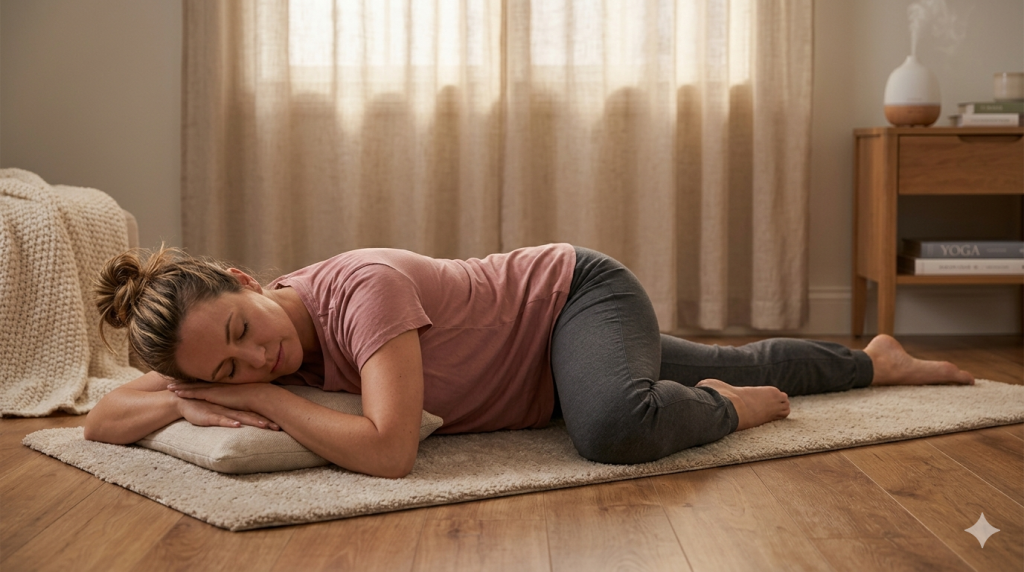
In an era where “hustle culture” has led to a global epidemic of burnout and chronic insomnia, the modern wellness seeker is pivoting. We are moving away from high-intensity grinders and toward “restorative biohacking”—the art of using ancient wisdom to recalibrate the nervous system. Enter Matsya Kridasana, or the Flapping Fish Pose.
While it may lack the Instagram-worthy flair of a handstand, this prone yoga posture is quietly becoming the “secret weapon” for physical therapists and sleep specialists alike. It is more than just a stretch; it is a neurological reset button.
The Origin: More Than Just a Name
In Sanskrit, Matsya means fish, Krida means play or flapping, and Asana means posture. This pose mimics the effortless movement of a fish gliding through water. In the hatha yoga tradition, it is classified as a relaxation pose, often used as a counter-posture after heavy backbends or as a standalone remedy for a taxed mind.
How to Master the Flapping Fish (Step-by-Step)
To reap the full physiological benefits, precision in alignment is key. Follow this guide to transform your bedroom or yoga mat into a sanctuary of recovery.
Phase 1: The Setup
Begin by lying flat on your stomach (the Advasana or Prone Pose). Let your heels fall outward and your big toes touch slightly. Feel the weight of your body being supported by the earth. Take three diaphragmatic breaths to signal to your brain that it is safe to relax.
Phase 2: Hand and Head Placement
Interlace your fingers or rest one palm on top of the other. Create a “pillow” with your hands. If you plan to turn your head to the left, place your right hand underneath. Gently rest the left side of your face (your temple and cheek) on the back of your hands.
Phase 3: The “Flap” (Leg Positioning)
This is the defining movement of the pose. Slowly draw your left knee toward your chest, sliding it along the floor. Aim for a 90-degree angle at the hip and knee, though flexibility will dictate the exact height. Your right leg should remain fully extended and relaxed behind you.
Phase 4: Final Alignment
Bring your left elbow closer to your left knee. Your body should now resemble a “triangular” shape on one side. Close your eyes. Soften your jaw. Let your belly expand fully against the floor with every inhale.
The Science of the “Prone Reset”: Why It Works
1. The Vagus Nerve and Parasympathetic Activation
The most significant benefit of Matsya Kridasana is its impact on the Vagus Nerve. By lying in this specific asymmetrical prone position, you apply gentle pressure to the chest and abdomen. This stimulates the “Rest and Digest” branch of the nervous system. Within minutes, your heart rate variability (HRV) improves, and your brain reduces the production of cortisol.
2. Digestive Peristalsis
In the US, digestive issues like IBS and chronic constipation are at an all-time high. Matsya Kridasana acts as a manual massage for the ascending and descending colons. The gentle compression of the bent leg against the abdomen, combined with deep breathing, creates a “pumping” action that aids waste movement through the digestive tract.
3. Sciatic Nerve Decompression
For those suffering from lower back pain or sciatica, this pose is a godsend. It creates a mild pelvic tilt that opens the sacroiliac (SI) joint. By lengthening the piriformis muscle without the intensity of a Pigeon Pose, it relieves pressure on the sciatic nerve, making it an excellent routine for office workers who sit for 8+ hours a day.
4. Respiratory Expansion
While one side of the chest is compressed, the other side is granted a unique freedom of movement. This encourages unilateral lung expansion, forcing the intercostal muscles to stretch and improving oxygen saturation in the lower lobes of the lungs.
The “Sleep Savior” for the Modern Professional
Why is this pose trending on Google Discover? Because it solves the “Tired but Wired” phenomenon. Most people try to fall asleep while their brain is still processing the day’s emails. Matsya Kridasana provides a physical “off switch.”
Unlike many yoga poses, this one can—and should—be practiced in bed. It stabilizes the body, preventing the tossing and turning that often keeps us awake. For many, it is the only position that allows the lower back to fully release after a day of postural stress.
Safety and Modifications
While generally safe for all levels, keep these US-standard safety tips in mind:
Pregnancy: This is one of the most recommended poses for the second and third trimesters. However, use a bolster or a thick pillow under the bent knee to avoid putting direct pressure on the baby.
Knee Sensitivity: If your knee feels “pinched” against the floor, slide a folded blanket underneath for cushioning.
Neck Strain: Ensure your hands are positioned so your neck stays neutral. If you feel a “crick,” adjust the height of your hand-pillow.
Conclusion: A Ritual for Longevity
In the grand scheme of fitness, we often prioritize the “burn.” But longevity is found in the “rest.” Matsya Kridasana is a reminder that health isn’t always about moving faster; sometimes, it’s about lying down like a fish in the current and letting the world go by. Whether you use it to fix your digestion, heal your back, or finally get eight hours of uninterrupted sleep, the Flapping Fish Pose is a small movement with massive returns.
FAQ: Frequently Asked Questions
Q1: Can I do this pose immediately after eating? While it’s generally best to wait 30–60 minutes after a heavy meal, Matsya Kridasana is actually beneficial for digestion. If you feel bloated, practicing this pose gently can help move trapped gas and ease discomfort.
Q2: Is it okay to sleep in this position all night? Yes. Many people naturally gravitate toward this “half-prone” position while sleeping. It is safer for the lower back than sleeping completely flat on your stomach, as the bent knee prevents excessive arching of the spine (lumbar hyperlordosis).
Q3: How long should I hold the pose for maximum benefits? For a quick nervous system reset, 2 to 3 minutes per side is sufficient. However, for deep restorative healing or to treat insomnia, you can stay in the pose for 5 to 10 minutes per side.
Q4: Will this help with my anxiety? Absolutely. By focusing on the sensation of the belly pressing against the floor (grounding) and slowing the breath, you signal the amygdala—the brain’s fear center—to stand down. It is a highly effective “emergency” pose for acute stress.
Q5: What is the difference between this and the Crocodile Pose (Makarasana)? In Crocodile Pose, both legs are straight and the heels turn inward. In Flapping Fish, one leg is bent. This asymmetry provides a deeper release for the hips and a more targeted massage for the internal organs.