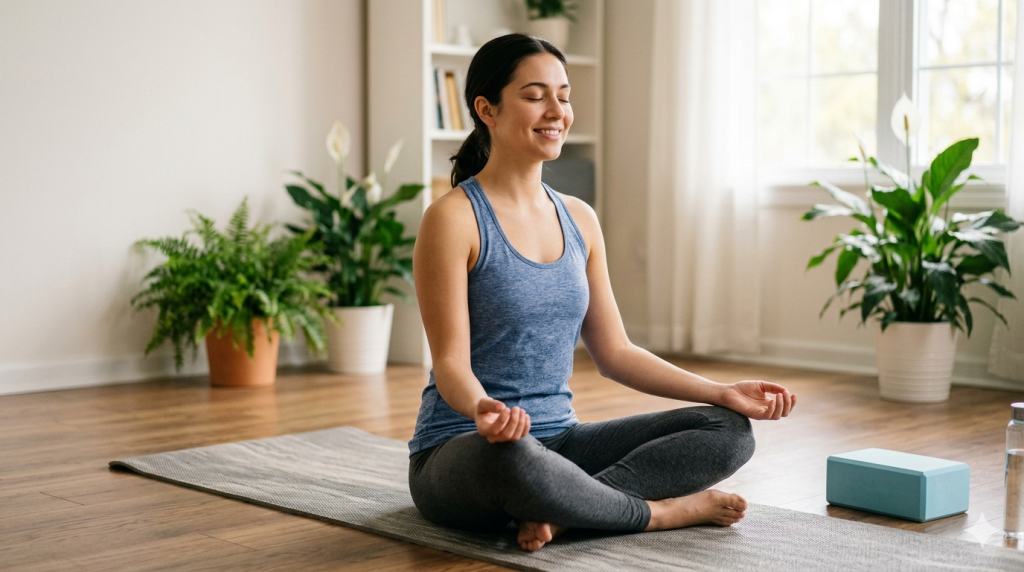
Have you ever scrolled through social media, seen a yogi twisted into a human pretzel, and thought, “I could never do that; I’m as stiff as a board”? You aren’t alone. The biggest misconception preventing millions of people from rolling out a mat is the idea that you need to be flexible or “good” at yoga before you even start.
In a recent feature for Fit&Well, a veteran yoga instructor broke down these barriers. Yoga isn’t a performance sport; it’s a personal practice of connecting your breath to your movement. If you’ve been waiting for the “perfect” time to start, here is your guide to embracing the beginner’s mind and starting your journey with confidence.
1. Let Go of the Performance Anxiety
The first and most vital piece of advice: Stop trying to “win” at yoga. There are no scoreboards in a yoga studio, and no one is handing out medals for the straightest legs in a forward fold.
Many beginners skip classes because they are afraid of looking “silly” or not keeping up with the person in the front row. However, the essence of yoga is mindfulness. If you are standing on your mat and consciously feeling your breath, you are already doing yoga. Flexibility isn’t a prerequisite; it is a byproduct of consistent practice. Even master yogis have days where their bodies feel tight. Treat your mat as a space for exploration, not an audition.
2. Start Slower Than You Think You Need To
A common mistake for “newbies” is jumping straight into a high-intensity Vinyasa Flow or Power Yoga class. When the pace is too fast, it’s easy to sacrifice proper alignment, which leads to frustration or, worse, injury.
Instead, look for Hatha or Beginner-Specific classes. These sessions focus on holding poses longer, allowing you to understand the mechanics of each movement:
Joint Alignment: How to stack your bones to protect your knees and shoulders.
Core Engagement: How to find stability from your center.
The Transition: How to move safely from one pose to the next.
Building a solid foundation in your first ten sessions will make your long-term progress much faster and significantly safer.
3. Learn the Difference Between “Discomfort” and “Pain”
In yoga, there is a thin but crucial line you must learn to navigate. When you stretch a muscle that hasn’t moved in a while, you will feel discomfort—a dull ache, a sensation of heat, or a “good” kind of tension. This is a sign of growth and change.
However, if you feel pain—specifically sharp, shooting sensations, pinching in the joints, or numbness—stop immediately. Yoga teaches us to listen to our bodies. Don’t let your ego push you into a pose when your body is sending a red alert. Taking a modification today prevents a six-month injury tomorrow.
4. Prioritize Your Breath Over Your Pose
If you are holding a “perfect” looking pose but holding your breath, you aren’t doing yoga—you’re doing calisthenics. In yoga, the breath (Pranayama) is the bridge between the mind and the body.
Deep, rhythmic breathing serves several functions:
Regulates the Nervous System: It lowers cortisol and keeps you calm.
Oxygenates Muscles: It allows tissues to relax and lengthen.
Focus: It gives your mind an anchor when a balance pose gets wobbly.
When you’re new, you will likely forget to breathe the moment things get difficult. That’s okay. When you notice you’re holding your breath, simply return to a steady inhale and exhale through your nose.
5. Invest in the Right Essentials (Not the Trendiest)
You don’t need designer leggings or expensive gadgets to start. However, two things will drastically improve your experience:
A High-Quality Yoga Mat: A “sticky” mat with good grip prevents your hands from sliding in Downward-Facing Dog, which protects your wrists and builds confidence.
Yoga Blocks: These are a beginner’s best friend. If you can’t reach the floor, blocks “bring the floor to you.” They allow you to maintain proper form without straining.
The Science-Backed Benefits
Beyond the instructor’s tips, science supports the power of a regular practice. Studies show that even 20 minutes of yoga a day can:
Improve Posture: Vital for those of us spending hours hunched over a desk.
Boost Cardiovascular Health: Through regulated breathing and stress reduction.
Enhance Sleep Quality: Relaxation poses at the end of a session signal the brain to enter a deep rest state.
FAQ: Common Questions for Beginners
Q: Do I need to be a vegetarian or follow a specific diet to do yoga? A: Absolutely not. Yoga is for everyone, regardless of your diet. While many find they naturally want to eat cleaner as they become more in tune with their bodies, there are no “food rules” for starting yoga.
Q: How long until I see results or become flexible? A: This varies by individual, but most people report feeling less stressed and more mobile after just 4 to 6 weeks of practicing 2–3 times per week.
Q: Is yoga “just for women”? A: Not at all. Yoga was originally developed by men. Today, many professional athletes (NBA, NFL) use yoga as a core part of their training to build “functional strength” and prevent career-ending injuries.
Q: What is the best time of day to practice? A: Morning practice can energize you for the day, while evening practice helps decompress the spine and mind. The “best” time is whenever you can consistently show up.
Conclusion
Yoga isn’t about being perfect; it’s about showing up. It’s about being okay with falling over, laughing at your own lack of balance, and eventually finding a sense of peace that stays with you long after you leave the mat. You don’t need to be “good” to start, but you do need to start to discover how good you can feel.
Would you like me to find some beginner-friendly yoga routines or suggest the best types of mats currently on the market?