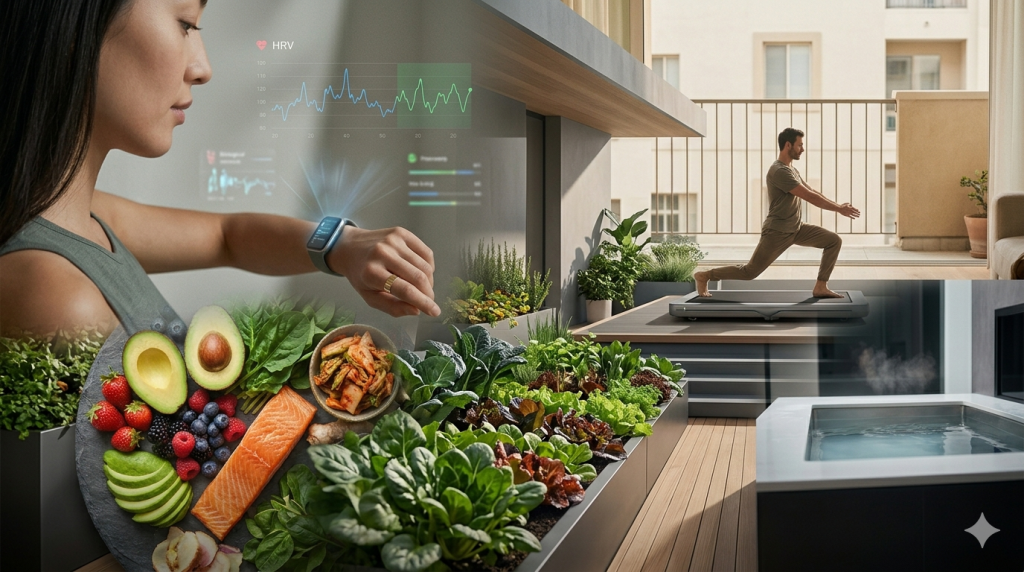
In the modern American fitness ecosystem, the conversation has moved far beyond “burning calories” or short-term aesthetic goals. 2026 marks a pivotal shift where the definition of wellness has completely transitioned toward biological performance and longevity. Based on the latest insights from experts at Fit&Well and leading sports science institutions, here is your roadmap to optimizing your body and mind in this new era.
1. The Era of Data-Driven Fitness
In major hubs like New York and Los Angeles, owning a smartwatch is now just the baseline. In 2026, Americans are managing their lives based on Heart Rate Variability (HRV) and Real-time Glucose Monitoring. Wearables—ranging from sleek smart rings to subdermal biosensors—have become indispensable “virtual coaches.”
Instead of forcing a high-intensity interval training (HIIT) session every day, the trend is now “recovery-based training.” If your HRV is low in the morning, your app will suggest a gentle restorative yoga session or an 8-minute mobility flow instead of a grueling weightlifting circuit. This data-first approach is the secret to preventing injury and maintaining peak performance for the long haul.
2. The Rise of Pilates and Functional Core Power
Pilates has officially broken free from the “specialized studio” stereotype. Across the U.S., Pilates is being recognized as the “foundation of all movement” for all genders. Standing Pilates, in particular, is leading the charge due to its ability to improve balance and correct “tech-neck” posture—a chronic result of our digital-heavy lifestyles.
By dedicating just 15 minutes a day to breath-controlled core movements, you can decompress the spine and build functional strength. This isn’t just about abs; it’s about moving with agility and feeling decades younger than your biological age.
3. “Exercise Snacking” – The Solution for the Hustle Culture
The traditional concept of a 60-to-90-minute gym block is being replaced by “Exercise Snacking.” New research from major U.S. universities shows that short bursts of movement (5–10 minutes) scattered throughout the day can boost metabolism and stabilize blood sugar just as effectively—if not more so—than one long workout followed by 8 hours of sedentary desk work.
A Sample Physical “Snack” Menu:
7:00 AM: 5-minute hip-opening flow and sun salutations.
12:00 PM: 10-minute brisk walk post-lunch to stabilize glucose.
4:00 PM: 3-minute plank or air squats at your desk to reboot energy.
4. Neurowellness: Training the Mind as a Muscle
Mental health is no longer a separate category; it is now integrated into physical fitness. The “Neurowellness” trend is exploding in high-end training facilities. Modern athletes and professionals are prioritizing nervous system regulation through advanced breathwork and cold exposure therapy (cold plunges).
The goal isn’t just stress reduction—it’s cognitive resilience. Incorporating 10 minutes of meditation or “box breathing” immediately after a workout helps the body shift from “fight or flight” to “rest and digest” faster, significantly optimizing muscle recovery and mental clarity.
5. AI-Powered Personalized Nutrition
The era of “one-size-fits-all” diets like extreme Keto or Veganism is sunsetting. Instead, Americans are turning to AI-driven personalized nutrition. By analyzing gut microbiomes and daily biometrics, AI platforms now provide precise, real-time meal recommendations.
In 2026, the focus has shifted toward anti-inflammatory foods and gut-health optimization. Understanding how your specific body reacts to certain macronutrients allows for sustained energy levels throughout the day without the need for excessive caffeine.
Conclusion
The journey of health in 2026 is no longer a race of intensity, but a game of intelligence and self-awareness. The key to the modern American lifestyle lies in the marriage of data technology and consistent micro-habits. Don’t wait for a full hour to open up in your schedule; start with small movement snacks and learn to listen to the biological signals your body is sending. Sustainable wellness is the result of small, smart choices made daily.
Frequently Asked Questions (FAQ)
1. Does “Exercise Snacking” actually help with weight loss? Yes. While each “snack” is short, doing them multiple times a day keeps your metabolic rate elevated and prevents the insulin resistance associated with prolonged sitting. It works best when paired with a nutrient-dense diet.
2. Should I choose a smartwatch or a smart ring for health tracking? If you prioritize detailed workout metrics (running, swimming), a smartwatch is superior. However, if you prioritize comfort and deep sleep/recovery analysis, smart rings are currently the trending choice in the U.S. for 24/7 wearability.
3. Why is gut health so important for fitness? A healthy microbiome improves nutrient absorption, reduces systemic inflammation (which aids muscle recovery), and even influences your workout motivation through the gut-brain axis.
4. Can Pilates replace weightlifting entirely? Pilates is exceptional for flexibility and core stability. However, to maximize bone density and build significant muscle mass, experts still recommend incorporating at least two days of resistance training (weights or bands) per week.