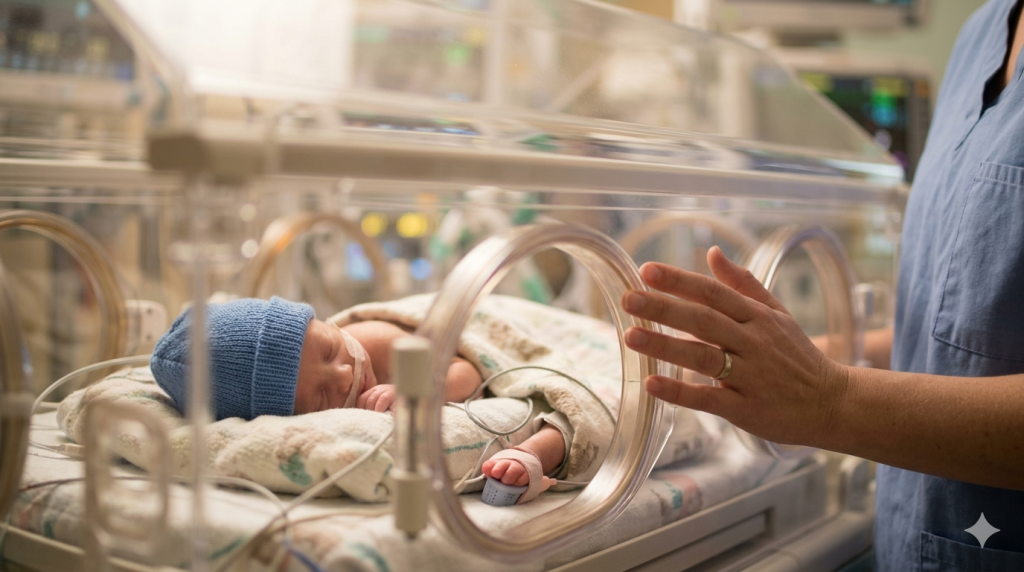
In the delicate world of Neonatal Intensive Care Units (NICUs), few diagnoses strike more fear into the hearts of parents and clinicians than Necrotizing Enterocolitis (NEC). It is a rapid, devastating intestinal disease that turns a fragile recovery into a life-threatening emergency.
Necrotizing Enterocolitis (NEC) is the most common and serious gastrointestinal emergency in preterm infants. It occurs when the wall of the intestine is invaded by bacteria, leading to inflammation, infection, and eventually, the death of intestinal tissue (necrosis). According to clinical data in the United States, NEC affects approximately 7% to 10% of infants weighing less than 1,500 grams. Despite decades of advanced neonatal research, mortality rates remain high—ranging from 15% to 30%—making early detection a literal matter of life and death.
1. The Pathophysiology: Why Does the Gut Fail?
The development of NEC is often described as a “perfect storm.” It arises from a complex interplay between an immature digestive system, an altered gut microbiome, and a hyper-reactive immune response.
In premature infants (typically those born before 32 weeks), the intestinal lining is underdeveloped and highly permeable. When these infants begin feeding, the delicate balance of their gut flora (microbiome) can shift. Harmful bacteria may proliferate, releasing toxins that damage the intestinal wall. This triggers an inflammatory cascade that restricts blood flow to the gut (ischemia). Without adequate oxygen and nutrients, the tissue begins to die. In the most severe cases, the intestinal wall perforates (tears), allowing bacteria and waste to leak into the abdominal cavity, causing systemic sepsis.
2. Primary Causes and Major Risk Factors
While the exact “trigger” for NEC is still being studied, medical experts have identified several critical catalysts:
Prematurity and Low Birth Weight: This is the #1 risk factor. The more premature the baby, the less developed their gut defenses and immune system.
Formula Feeding: Studies consistently show that formula-fed infants have a significantly higher risk of NEC compared to those fed exclusively breast milk. Breast milk contains specialized antibodies (IgA) and growth factors that “seal” the gut lining.
Abnormal Gut Colonization: Infants in the NICU are often exposed to hospital-acquired bacteria. If beneficial bacteria (like Bifidobacterium) are absent, pathogenic bacteria take over.
Reduced Blood Flow: Conditions like congenital heart disease, birth asphyxia, or respiratory distress syndrome can divert blood away from the intestines to protect the brain and heart, leaving the gut vulnerable to injury.
3. Recognizing the Red Flags: Symptoms to Watch For
NEC symptoms typically appear between the second and sixth week of life. Because the disease can progress from mild to catastrophic in just hours, caregivers look for these specific “red flags”:
Abdominal Distension: The baby’s belly becomes visibly swollen, tight, and shiny.
Gastric Residuals: Before a feeding, the nurse may find “residuals”—undigested milk or green-tinted bile—remaining in the stomach.
Bloody Stools: This can range from visible bright red blood to “occult” blood only detectable by a lab test.
Systemic Instability: The infant may become lethargic, experience sudden drops in heart rate (bradycardia), have frequent pauses in breathing (apnea), or struggle to maintain body temperature.
Clinicians use the Bell Staging Criteria to categorize the disease from Stage I (Suspected) to Stage III (Advanced/Perforated).
4. Diagnosis and Current Treatment Protocols
Diagnosis usually begins with a physical exam followed by an abdominal X-ray. The hallmark sign of NEC on an X-ray is pneumatosis intestinalis—gas bubbles trapped within the wall of the intestine.
Current standard treatments include:
Bowel Rest (NPO): Feeding is stopped immediately. The infant receives all nutrition through an IV (Parenteral Nutrition).
Gastric Decompression: A tube is inserted into the stomach to remove excess air and fluid.
Aggressive Antibiotics: Broad-spectrum antibiotics are administered to fight the underlying infection and prevent sepsis.
Surgical Intervention: If the bowel perforates or if the tissue death is extensive, surgeons must remove the necrotic sections. This often involves creating a temporary ostomy (an opening in the belly for waste).
5. The Long-Term Outlook: Life After the NICU
For the “graduates” who survive NEC, the journey doesn’t end at the hospital doors. Long-term complications can include:
Short Bowel Syndrome: If a large portion of the intestine was removed, the baby may struggle to absorb enough nutrients to grow, requiring long-term IV nutrition.
Intestinal Strictures: Scarring from the inflammation can cause the bowel to narrow, leading to future blockages.
Neurodevelopmental Delays: Severe NEC is associated with a higher risk of motor and cognitive challenges later in childhood due to the systemic inflammation experienced during infancy.
6. Prevention Strategies: “Milk is Medicine”
The U.S. medical community has pivoted toward aggressive prevention strategies, which have shown great promise:
Exclusive Human Milk Diet: Using mother’s own milk or pasteurized donor human milk is the most effective way to lower NEC rates.
Probiotics: Specific strains of “good bacteria” are increasingly used in NICUs to help balance the infant’s gut microbiome.
Standardized Feeding Protocols: Slowly and cautiously increasing feeding volumes helps the immature gut adapt without becoming overwhelmed.
Conclusion
Necrotizing Enterocolitis remains a daunting challenge in neonatal care, requiring a vigilant partnership between parents and medical teams. While the diagnosis is terrifying, advances in surgical techniques and a national push for human-milk-based nutrition are improving outcomes every day. For parents in the NICU, being informed and advocating for “milk-first” strategies are the most powerful tools available to protect their little warriors.
FAQ: Frequently Asked Questions About NEC
Q: Can a full-term baby get NEC? A: Yes, but it is rare (about 10% of cases). In full-term babies, NEC is usually triggered by an underlying condition like a heart defect or an infection that limits blood flow to the gut.
Q: Is NEC contagious? A: No, NEC is not a contagious “flu” or virus. However, “outbreaks” can occur in a NICU if a specific strain of harmful bacteria spreads among the infants, leading to several cases at once.
Q: How long does it take for a baby to recover from NEC? A: Mild cases (Stage I) may resolve with 7–10 days of antibiotics and bowel rest. Severe cases involving surgery may require months of hospitalization and specialized follow-up care.
Q: Does having NEC mean my baby will have food allergies? A: Not necessarily. While the gut environment is altered, there is no direct link between NEC and traditional food allergies, though the child may have a more “sensitive” digestive system for a period of time.