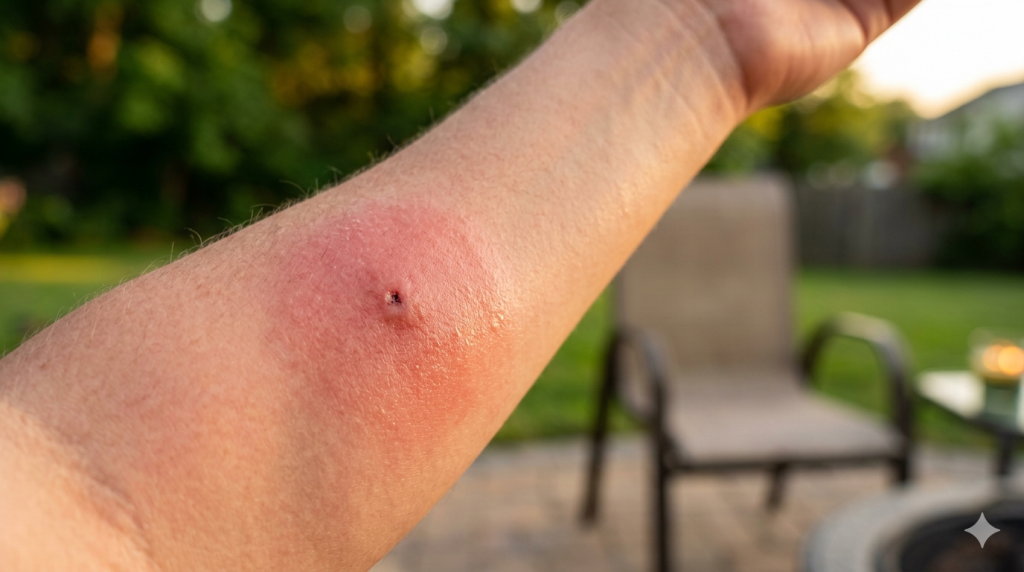
A simple mosquito bite is usually a minor summertime nuisance. But for some, that tiny itch can transform into a limb-threatening infection known as cellulitis. Here is how to tell if your “bug bite” has turned into a medical emergency.
In the United States, millions of people head outdoors every year to enjoy hiking, backyard BBQs, and camping. With the outdoors comes the inevitable encounter with mosquitoes. While most of us worry about West Nile Virus or Zika, there is a much more common threat lurking in the aftermath of a bite: Cellulitis. This deep-skin bacterial infection sends thousands of Americans to the ER annually, often because the early warning signs were mistaken for a simple allergic reaction.
1. The Anatomy of an Infection: From Itch to Illness
To understand cellulitis, we first have to clear up a common myth: The mosquito itself does not usually “inject” the cellulitis bacteria into you. Instead, the mosquito acts as the locksmith that picks the lock of your body’s primary defense—your skin.
When a mosquito bites, it leaves behind saliva that triggers a histaminic response, causing that familiar itchy bump. The real danger begins with the scratch.
Our fingernails are hotspots for bacteria like Staphylococcus aureus (Staph) and Streptococcus (Strep). When you scratch an itchy bite, you create microscopic tears in the skin. These “micro-portals” allow bacteria to bypass the epidermis and reach the dermis and subcutaneous tissues. Once there, in the warm, nutrient-rich environment of your inner skin layers, the bacteria multiply rapidly.
2. Cellulitis vs. The “Skeeter Syndrome”
Many people experience large, red, swollen reactions to mosquito bites, often referred to as Skeeter Syndrome. It can be difficult to distinguish this from an actual infection. However, clinical experts point to several “Red Flags” that suggest cellulitis:
The “Expanding Map”
A normal allergic reaction usually reaches its peak size within 24 hours and then stays the same or shrinks. Cellulitis is progressive. If the redness is spreading—expanding like a stain on a tablecloth—it is a sign that the bacteria are winning the battle against your immune system.
Temperature Check
Place the back of your hand on the red area. Cellulitis feels significantly warmer, or even hot, compared to the surrounding healthy skin. This “localized fever” is a hallmark of deep-tissue infection.
Pain Over Itch
While a standard bite is maddeningly itchy, cellulitis is painful. The area may feel tender to the touch, throbbing, or tight. If the sensation shifts from “I want to scratch this” to “I don’t want anything touching this,” you are likely dealing with an infection.
Skin Texture (Peau d’orange)
In advanced cases, the skin may become so swollen that it resembles the skin of an orange (peau d’orange). The hair follicles appear as tiny pits in the swollen, glossy skin.
3. High-Risk Factors: Are You More Vulnerable?
While anyone can develop cellulitis from a mosquito bite, certain “Risk Factors” make the condition more likely to escalate:
Diabetes: High blood sugar can weaken the immune response and slow down the healing process.
Lymphedema: If you have chronic swelling in your arms or legs, your lymphatic system (which carries immune cells) isn’t working at 100%, making it harder to clear out bacteria.
Circulatory Issues: Poor blood flow, often seen in smokers or those with peripheral artery disease, prevents antibiotics and natural antibodies from reaching the infection site quickly.
Eczema or Psoriasis: If your skin is already compromised by a chronic condition, you have more “entry points” for bacteria to take hold.
4. The “Sharpie Test” and Home Monitoring
If you suspect a bite is turning into cellulitis, US dermatologists often recommend a simple DIY tracking method: The Sharpie Test.
Take a permanent marker and draw a circle around the edge of the redness.
Note the time.
Check the area in 4 to 6 hours.
If the redness has moved significantly outside the line, it’s time to call your primary care physician or visit an Urgent Care center.
5. When It Becomes a Crisis: Systemic Symptoms
Cellulitis can stay localized, but if the bacteria enter the bloodstream (Sepsis) or the lymphatic system, it becomes a life-threatening emergency. Seek immediate care if you experience:
Fever and Chills: A sign the infection is no longer just in your skin.
Red Streaking: Visible red lines radiating away from the bite toward your heart. This is called lymphangitis and is a serious warning sign.
Lethargy or Confusion: These are symptoms of systemic toxicity.
Blistering: If the red area begins to develop blisters or “weep” fluid, the infection is severe.
6. Treatment and Prevention
The standard of care for cellulitis in the US is a course of oral antibiotics (such as Cephalexin or Dicloxacillin). Most patients see improvement within 48 to 72 hours, but the most critical rule is: Finish the entire prescription. Stopping early can lead to a recurrence that is resistant to antibiotics.
How to Prevent the Progression:
Cleanliness: If you scratch a bite open, wash it immediately with warm water and antibacterial soap.
Barrier Creams: Apply an over-the-counter antibiotic ointment (like Bacitracin) and cover it with a bandage to prevent further scratching.
Anti-Itch Strategy: Use hydrocortisone cream or an oral antihistamine (like Benadryl or Claritin) to stop the urge to scratch before you break the skin.
Conclusion
A mosquito bite doesn’t have to end in a hospital stay. By staying vigilant, using the “Sharpie Test,” and resisting the urge to scratch, you can keep a minor annoyance from turning into a major health crisis. Remember: when in doubt, get it checked out. Early intervention is the difference between a 7-day pill regimen and a 5-day IV-antibiotic hospital stint.
Frequently Asked Questions (FAQ)
Q: Can I catch cellulitis from someone else who has it? A: No. Cellulitis is a non-contagious infection of the deeper skin layers. You cannot catch it by touching someone else’s infected area.
Q: Can I use “natural” remedies like apple cider vinegar or tea tree oil to treat cellulitis? A: While some natural oils have antiseptic properties, they cannot penetrate deep enough into the skin layers to kill a cellulitis infection. Relying on home remedies for cellulitis can be dangerous. Always consult a doctor for a proper antibiotic prescription.
Q: How long does it take for cellulitis to go away? A: With proper antibiotics, the redness and pain usually begin to subside in 3 days, but the skin may take 7 to 10 days to return to its normal color.
Q: Why does my doctor want me to keep my leg elevated? A: Elevation uses gravity to reduce swelling. Lowering the swelling allows blood to flow more freely, which helps the antibiotics reach the site of the infection more effectively.