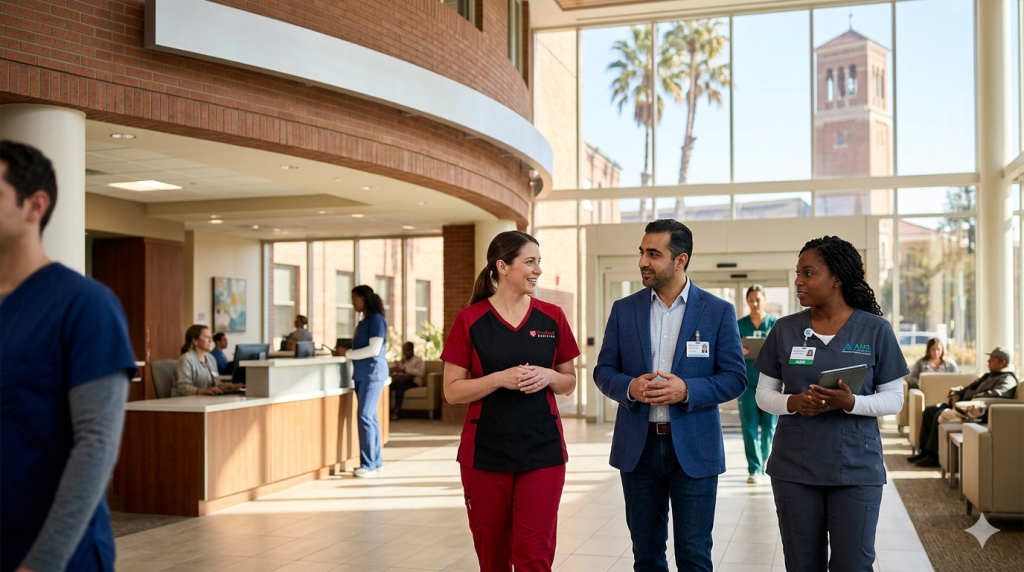
The strategic alliance between a world-renowned academic medical center and a robust public health network is not just saving a community hospital—it’s redefining the “safety-net” model for 21st-century medicine.
In a move that signals a seismic shift in the Northern California healthcare landscape, Stanford Health Care (SHC) and Alameda Health System (AHS) have officially entered into a multi-year strategic partnership to support and revitalize St. Rose Hospital in Hayward, California. This collaboration aims to stabilize the financially embattled facility while injecting world-class clinical expertise into one of the East Bay’s most critical healthcare hubs.
From the Brink of Closure to a Sustainable Future
For decades, St. Rose Hospital has served as a vital lifeline for the residents of Hayward and Central Alameda County. As an independent, non-profit “safety-net” hospital, it provides care to a population where more than 70% of patients rely on Medi-Cal or Medicare. However, the post-pandemic era brought St. Rose to its knees.
By late 2024, the hospital was hemorrhaging nearly $2 million a month, facing the very real prospect of a permanent shutdown. The closure would have been catastrophic, leaving hundreds of thousands of residents without a local Emergency Room and forcing neighboring facilities into a state of perpetual overflow.
The tide began to turn when Alameda Health System took over the management of St. Rose. Now, with the addition of Stanford Health Care’s resources and clinical prestige, the hospital is not just surviving—it is being reimagined.
“This is more than a financial rescue; it is a clinical evolution,” said a spokesperson for the coalition. “We are moving from a state of crisis management to a state of excellence.”
The Pillars of the Partnership: Clinical Integration
The agreement between Stanford and AHS is built on several key clinical pillars designed to meet the specific needs of the Hayward community:
1. Advanced Medical-Psychiatric Care
One of the most pressing gaps in Bay Area healthcare is the intersection of physical and mental health. Stanford and AHS are developing a specialized Medical-Psychiatric Unit at St. Rose. This unit will cater to patients who require acute medical stabilization alongside intensive psychiatric support—a service often unavailable in standard community hospitals.
2. Specialized Surgical Access
Under the new agreement, Stanford Health Care surgeons and proceduralists will begin performing cases at St. Rose. This brings Stanford’s legendary surgical precision to a local setting, allowing patients to receive high-acuity care without traveling to Palo Alto.
3. Skilled Nursing Facility (SNF) Optimization
To address the regional bed shortage, St. Rose will dedicate a portion of its facility to high-level skilled nursing care. Stanford will utilize these beds for patients transitioning out of acute care, ensuring they receive rehabilitative services within a high-quality medical framework before returning home.
4. The St. Rose Hospital Community Fund
Beyond clinical walls, Stanford Health Care has committed to supporting the creation of a Community Fund. This initiative will focus on long-term investments in health equity, addressing the social determinants of health—such as housing and food security—that often drive hospital readmissions in the Hayward area.
A Model of “Academic-Public” Synergy
This partnership represents a growing trend in US healthcare: the marriage of academic medicine and public health systems. Stanford Health Care brings cutting-edge research, a massive referral network, and financial stability. Alameda Health System brings a deep, mission-driven expertise in managing diverse, high-need populations.
Rick Shumway, Chief Operating Officer at Stanford Health Care, emphasized that the goal is “care without borders.” By decentralizing specialty care, Stanford is able to alleviate pressure on its main campus while uplifting the standards of care at the community level.
For the residents of Hayward, this means that their local hospital—once a symbol of financial struggle—is now becoming a satellite for some of the best medical minds in the country.
Economic and Social Impact
The stabilization of St. Rose is also a major economic win for Alameda County. The hospital is one of Hayward’s largest employers, supporting over 800 staff members and 300 affiliated physicians.
“St. Rose is the heart of Hayward,” said California State Assemblymember Liz Ortega, who was instrumental in securing state support for the hospital. “Seeing Stanford and AHS come together to protect these jobs and these services is a testament to what happens when we prioritize people over profit.”
FAQ: What This Means for Patients
Will my insurance still be accepted at St. Rose now that Stanford is involved? Yes. St. Rose remains a community-focused hospital. The partnership is designed to expand services and improve quality, not to restrict access. They continue to prioritize Medi-Cal, Medicare, and commercial insurance plans.
Will I see Stanford doctors at St. Rose? Yes, in specific departments. Stanford surgeons and specialists will be integrated into the hospital’s workflow, particularly in the new surgical and medical-psychiatric units.
Is St. Rose still an independent hospital? St. Rose is currently managed by Alameda Health System (AHS). The partnership with Stanford is a strategic collaboration, meaning SHC provides expertise and resources, but the hospital remains part of the regional safety-net network under AHS leadership.
Conclusion
The alliance between Stanford Health Care, Alameda Health System, and St. Rose Hospital serves as a blueprint for the future of American healthcare. In an era where many community hospitals are failing, this “Hayward Model” proves that through strategic partnership, innovation, and a shared commitment to health equity, even the most vulnerable institutions can be transformed into centers of excellence. The real winners are the families of the East Bay, who can now rest assured that world-class care is just a few blocks away.