Most fitness enthusiasts kick off their mornings with the usual suspects: a quick jog, a few sun salutations, or perhaps a high-intensity interval session. While these are excellent for cardiovascular health, many modern yoga sequences—and even specialized gym routines—are missing a fundamental movement that bridges the gap between static flexibility and functional power.
If you are looking for a singular way to transform your physical foundation while centering your mind before the workday begins, there is one often-overlooked posture that stands above the rest. It isn’t a complex inversion or a flexible-backbend; it is a grounding, strengthening powerhouse that optimizes your body’s alignment and boosts metabolic energy from the moment you step off your mat.
The Missing Link in Modern Yoga Classes
In the fast-paced world of “Vinyasa Flow” and “Power Yoga,” the emphasis often shifts toward aesthetic transitions and extreme flexibility. Consequently, the structural stability of the lower body sometimes takes a backseat. Many practitioners find themselves able to touch their toes but struggling with the functional balance required for real-world movements.
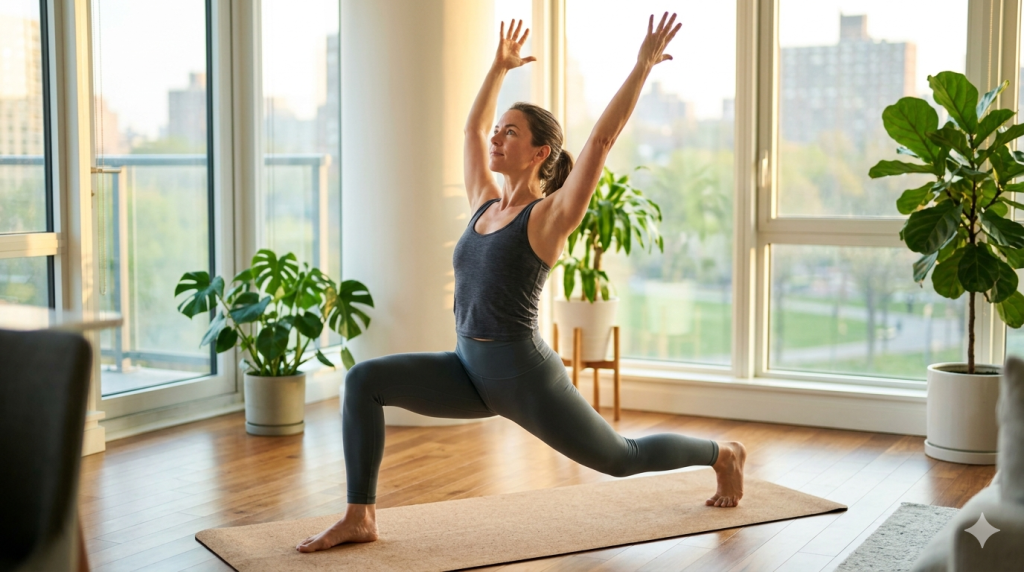
The posture in question—often referred to as a variation of a high lunge or a stability-focused “Crescent Moon”—is frequently rushed through in standard classes. However, when executed with intentionality, it serves as a triple-threat for wellness:
Strength: It engages the quadriceps, hamstrings, and glutes simultaneously.
Stability: It forces the deep stabilizers in the ankles and the core to work in unison.
Energy: By opening the hip flexors and expanding the chest, it encourages deep diaphragmatic breathing, which oxygenates the blood and “wakes up” the nervous system.
Why Morning Movement Matters for Longevity
The science of “morning primers” suggests that the way we move within the first 60 minutes of waking dictates our hormonal regulation for the rest of the day. Incorporating a high-stability pose helps regulate cortisol levels, ensuring that the natural morning spike in energy is used for muscle engagement rather than turning into “morning anxiety.”
Furthermore, as we age, stability becomes a primary marker of health. Statistics show that balance-related injuries are a leading cause of decreased mobility in later life. By prioritizing a pose that challenges your center of gravity while building muscular endurance, you aren’t just “stretching”—buidling a “physical insurance policy.”
Deep Dive: How to Execute for Maximum Impact
To reap the rewards of this pose, the technique must be precise. Unlike a relaxed stretch, this is an active engagement exercise.
The Foundation: Start in a standing position. Step one foot back significantly, keeping the heel of the back foot lifted. This “active heel” is the secret to engaging the calves and stabilizing the ankle.
The Power Center: Sink your hips until your front thigh is as close to parallel with the floor as possible. Ensure your knee stays aligned over your ankle to protect the ligaments.
The Core Connection: Instead of arching your back, tuck your tailbone slightly. This engages the lower abdominals and provides a deep, necessary stretch to the psoas muscle—a muscle that stays tight in most office workers due to prolonged sitting.
The Reach: Extend your arms toward the ceiling. This isn’t just for show; it expands the ribcage, allowing for maximum lung capacity and an immediate “energy hit” through increased oxygen flow.
The Metabolic and Mental Benefits
Beyond the physical muscular burn, this morning ritual serves a neurological purpose. Holding a challenging balance pose requires proprioception—the body’s ability to sense its location, movements, and actions. This high level of focus acts as a form of “moving meditation.” It clears the “brain fog” often associated with early mornings, replacing it with a sharp, tactical alertness.
From a metabolic standpoint, engaging the large muscle groups of the legs first thing in the morning stimulates the endocrine system. This can lead to better glucose processing throughout the day, which is essential for maintaining steady energy levels and avoiding the mid-afternoon “sugar crash.”
Integrating Stability into a Busy Lifestyle
The beauty of this specific movement is its efficiency. In a world where we are told we need 60-minute gym sessions to see results, “micro-movements” are proving to be incredibly effective. Holding this pose for just 90 seconds per side every morning can lead to noticeable changes in posture and lower-body strength within just two weeks.
It requires no equipment, very little space, and can even be done in pajamas. It is the ultimate “no-excuse” fitness hack for the modern professional.
Conclusion: Elevate Your Morning Standard
Fitness is often overcomplicated by trendy gadgets and complex programming. Yet, the most profound changes usually come from mastering the basics. By reintroducing this missing stability pose into your morning, you are choosing to prioritize the health of your joints, the strength of your muscles, and the clarity of your mind.
Don’t just walk through your day; drive through it with the stability and energy that comes from a grounded foundation. Start tomorrow morning—step back, reach up, and breathe.
Frequently Asked Questions (FAQ)
1. How long should I hold the pose to see results? For beginners, aim for 30 seconds per side. As your stability improves, work your way up to 90 seconds or 2 minutes. The goal is “active holding,” where you are constantly engaging your muscles rather than just “hanging” in the joints.
2. Is this pose safe for people with knee pain? If you have sensitive knees, you can shorten your stance or keep a slight bend in the back knee. The key is ensuring the front knee does not track past your toes. Always consult with a physical therapist if you have chronic joint issues.
3. Why is this better than a standard lung stretch? A standard stretch is usually passive. This stability version is active—meaning you are firing your nervous system and building muscle while you stretch. This leads to better “functional flexibility” that actually helps you in daily life.
4. Can I do this if I’m not a “yoga person”? Absolutely. While this originates from yoga traditions, it is fundamentally a biomechanical strength exercise. Think of it as a static lunge designed to optimize your body’s alignment.
5. Should I do this before or after coffee? Ideally, perform this movement before or during your morning hydration. The natural energy boost from deep breathing and muscle activation can actually reduce your dependency on that first cup of caffeine!